Cat Portraits: A Guide for Britain's Least Cooperative Models
A cat portrait is a custom artwork made from a photo of your cat, rendered in a named style and printed on archival canvas — and getting that photo is, honestly, the hardest part of the whole process for most British cat owners. Cats do not sit for anyone; they pose on their own schedule or not at all, then leave. Fur d'Amore works around that: upload whatever photo you actually managed to get, preview the result free, and pay only if it's right.
What Makes a Cat Portrait Different?
Structurally, nothing — a cat portrait is still a portrait in the traditional sense, using the same six styles, the same archival canvas and the same free preview as any other Fur d'Amore portrait. Fur d'Amore also portrays dogs, families, couples and children, so cats aren't the whole business, just a very large part of it. What actually differs is the raw material: getting a usable photograph of a cat is a different challenge entirely from photographing almost anything else that might be commissioned.
It's also worth saying plainly that a cat portrait isn't a lesser or smaller-scale version of a dog portrait. The finished piece is the same size range, the same archival canvas, the same choice of heirloom frame. The only asymmetry is upstream, in how the photo gets taken — and once a usable photo exists, a cat's face carries a portrait every bit as well as a dog's does, arguably better, given how much natural drama a cat's features already have to work with.
Why Photographing a Cat Is Genuinely Difficult
Dogs can be bribed, positioned, and held roughly still by someone crouched just out of frame with a biscuit. Cats regard all of this as an insult. A cat that seems perfectly happy on a windowsill for forty minutes will, on the appearance of a camera, stand up, stretch, and leave the room entirely — not from fear, usually, just profound and total disinterest in the project. There is no version of "say cheese" that works on a cat. The honest starting point is accepting that a genuinely posed cat photo, the kind that makes for proper portraiture, is rare, and building a strategy around opportunism instead: catching the cat already doing something photogenic, rather than trying to direct it into position.
This isn't a failing on the owner's part, and it isn't really a failing on the cat's part either. It's simply what cats are like, and any approach that assumes otherwise is set up to fail before it starts. Multi-cat households compound the problem, since getting two cats to occupy the same square foot of sofa at the same calm moment is closer to a logistics exercise than a photography one — patience over several days generally beats a single determined attempt.
How to Actually Catch a Cat's Face
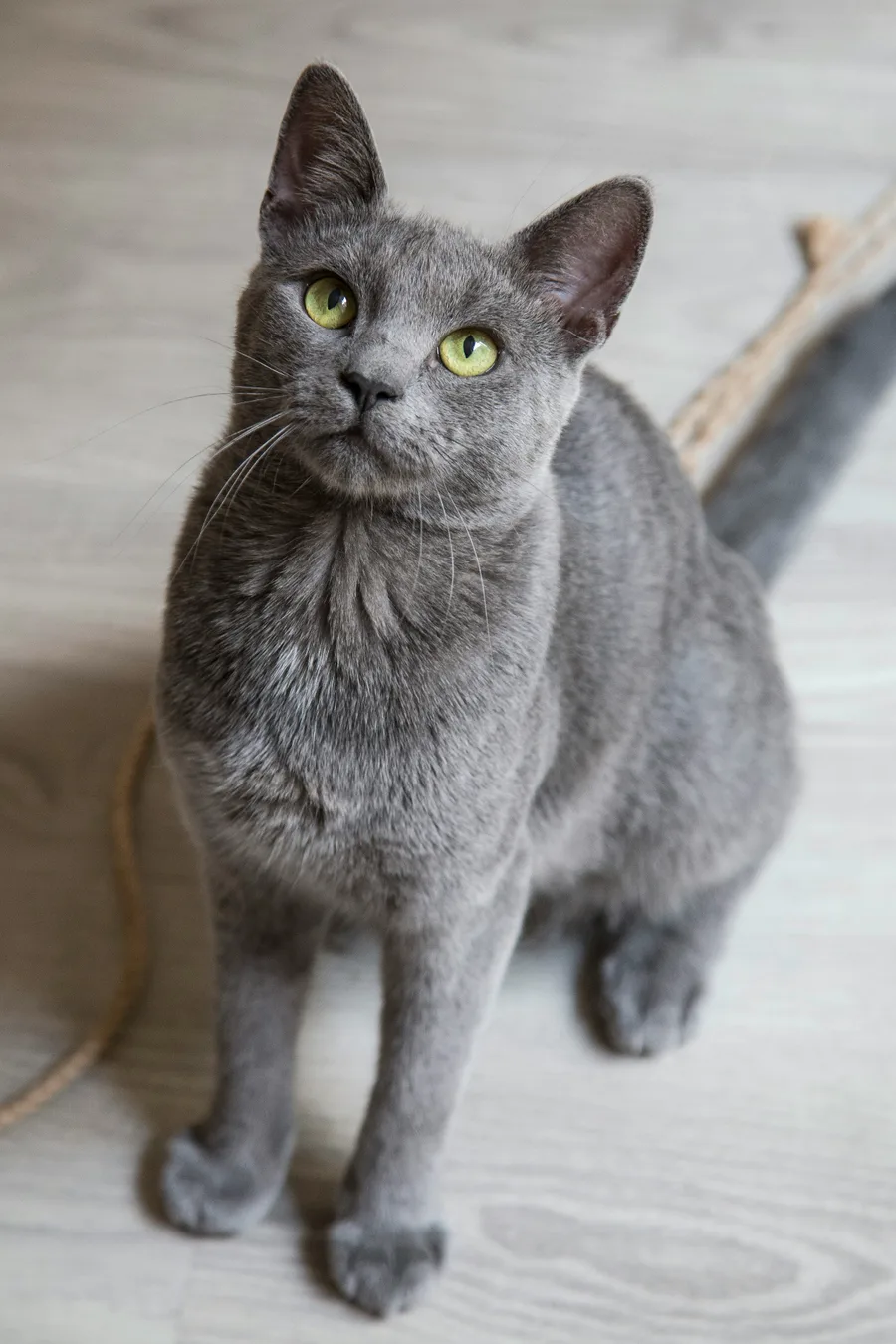
A few things shift the odds. Bright natural daylight matters enormously — cats gravitate towards a sunny windowsill or a warm patch of carpet on their own, so working with wherever the cat has already chosen to sit beats trying to relocate it. Get low, closer to the cat's own level, rather than shooting down from standing height, which mostly produces a photo of the top of a head. Have a second person hold a toy, a feather wand, or simply a hand just above and behind the camera lens; a cat looking slightly upward and alert, ears forward, produces a far better result than one mid-blink or looking away. Take far more photos than seems reasonable, since the useful frame is rarely an early one. Avoid flash entirely — it startles cats and produces the same glassy-eyed glare in photographs that it does in humans, only less flattering on a cat's face. Candid beats staged: a cat caught mid-yawn on its own windowsill usually photographs better than the same cat glared reluctantly at a phone held two feet away. Older photos are worth digging out, too — a cat who was more tolerant as a kitten or simply happened to sit still once, years ago, has already given you the shot; there's no rule that the reference photo has to be recent, only that it's sharp and shows the face clearly.
Which Style Suits a Cat's Natural Hauteur?
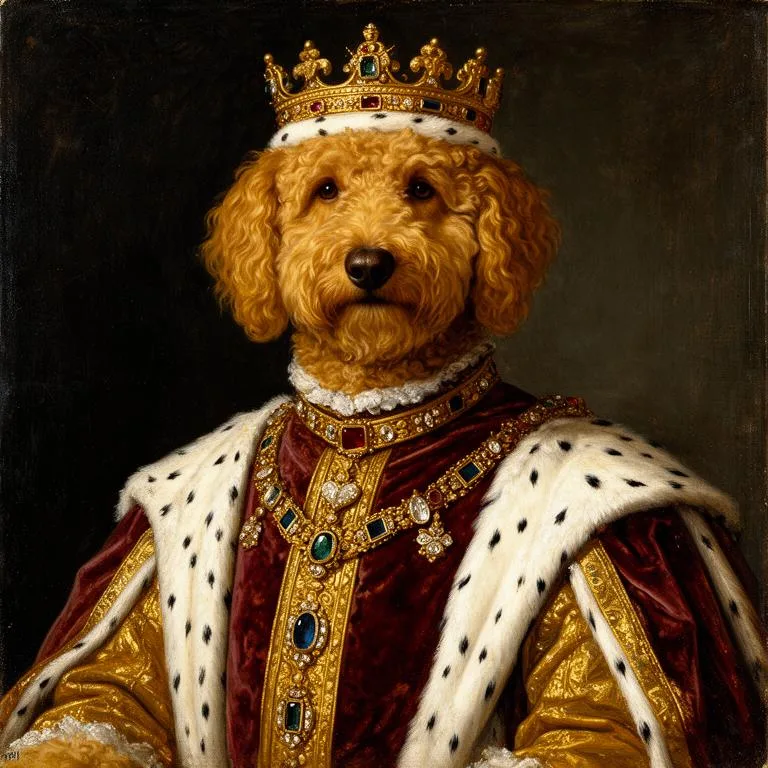
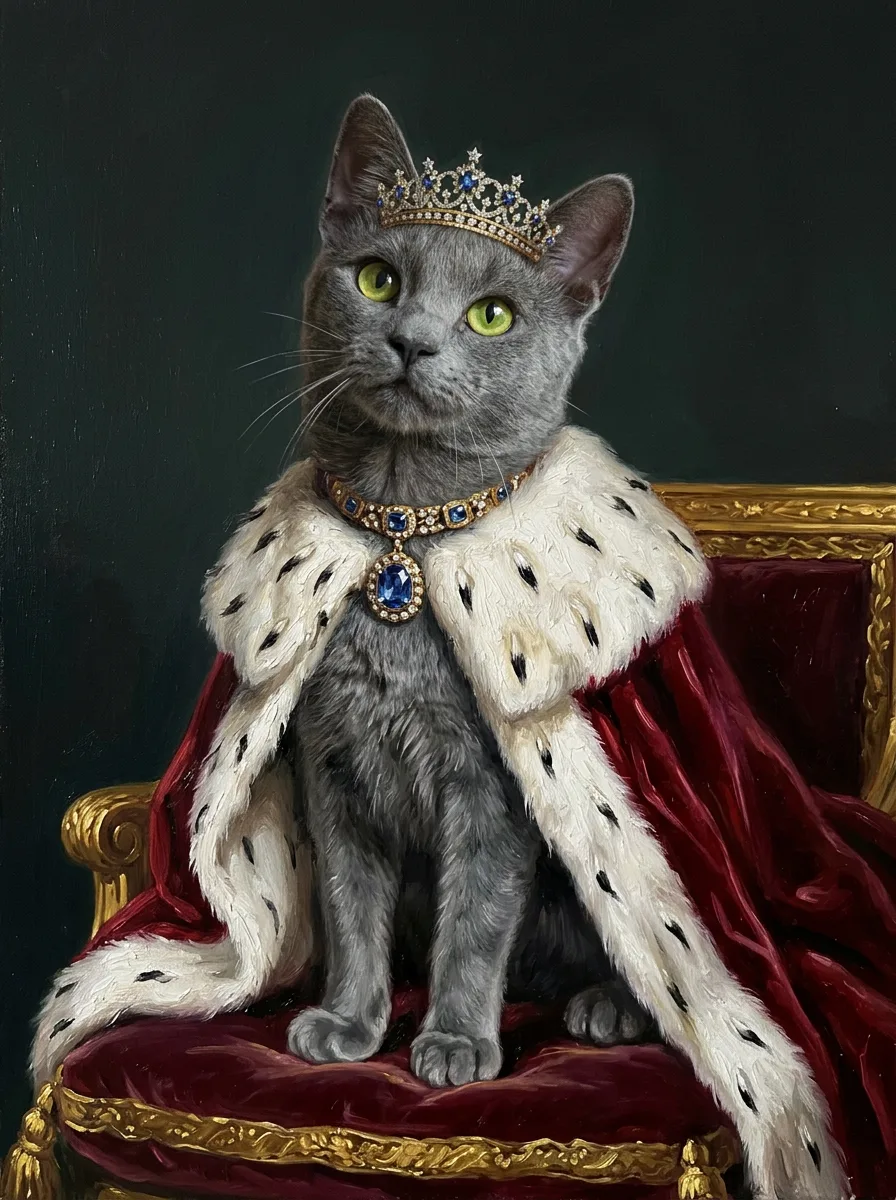
Cats have an advantage dogs generally don't: an existing air of superiority that most of the six styles are built to flatter. Royal is the obvious pairing — a cat already behaves as though it owns the house, so a crown merely confirms what it already believed. Aristocrat suits a cat with cooler, more reserved features: quiet superiority rather than a throne. Baroque flatters a cat with dramatic markings or striking eyes, since heavy shadow and gilt reward strong contrast. Renaissance — the house style, and the one that borrows most directly from genuine Renaissance art — flatters almost any cat, particularly one with rich or unusual colouring. Military works surprisingly well on a large, solidly built cat with a commanding presence. Romantic suits the softer-faced, more affectionate cat — the sort that actually curls up on a lap occasionally, against all expectation. Colour plays a bigger part than with dogs, too: a jet-black cat tends to hold Baroque's deep shadow beautifully, while a pale or ginger cat often suits Renaissance's warmer light, simply because there's more visible contrast for the style to work with.
British Cat Breeds, by Style
A starting point for three well-known breeds, plus the moggy who accounts for most of Britain's actual cat population.
| Breed | Suggested style | Why it works |
|---|---|---|
| British Shorthair | Aristocrat | A round, composed face carries quiet grandeur without effort. |
| Ragdoll | Romantic | A famously placid temperament suits the softest of the six styles. |
| Bengal | Baroque | Bold, wild markings hold their own against heavy drama and gilt. |
| The ordinary magnificent moggy | Royal | No pedigree required for an ego that size. |
As with dogs, none of this is binding — a moggy carries Baroque as well as a Bengal does, and the free preview is the only opinion that actually counts. Most British cats are, after all, moggies rather than any registered breed, and the portrait doesn't know the difference or care. Coat pattern matters at least as much as breed regardless — a tabby's markings, a tortoiseshell's patchwork, or a pure white cat's stark simplicity will all pull toward different styles more strongly than pedigree alone ever would.
Whichever cat ends up on the wall, look after the one on the windowsill too. The RSPCA, Cats Protection and PDSA all publish sound general advice for cat owners, portrait or no portrait.
Is a Cat Portrait AI-Generated?
Yes — the artwork itself runs on AI, and that's precisely what makes a free preview possible before any payment. That matters for any pet, but it matters more for a cat, given how much luck is usually involved in getting a workable photo in the first place. A traditional commissioned-painting studio asks for faith in advance; Fur d'Amore shows the actual result first. What isn't automated is what happens after approval: the canvas is printed to an archival, giclée-grade standard — the same pigment-based process serious galleries and photographers rely on — then set into a heritage frame, only once the image is signed off. Fur d'Amore is rated 4.9/5 by 10,000+ customers, a fair number of whom presumably fought their cat for that one usable photo.
It's also, in a roundabout way, better suited to a difficult subject than a traditional commission would be. A studio working from a single, imperfect, hard-won photograph has one shot to interpret it well. An AI-generated preview can be reviewed and, if the likeness isn't quite right, tried again with a different style or a different photo entirely, at no cost, until it actually looks like the cat in question rather than a cat in general.
Pricing and Delivery to the UK
A cat portrait costs the same as any other Fur d'Amore piece, since pricing runs by size and format rather than by species: roughly £15 at the digital-download end, climbing toward £226 at the top of the ladder for the largest heirloom-framed piece, with desk portraits and plain canvas sitting in between. Every figure displays in pounds and moves with exchange rates, confirmed at the point of checkout. Fur d'Amore ships to the United Kingdom. Digital downloads are available instantly; printed and framed portraits take 5–7 business days for production, and international delivery typically takes 7–14 business days, as stated in the questions section of the Fur d'Amore homepage.
As with any parcel arriving from overseas, general UK import VAT and duty rules can come into play once a certain value is crossed — HMRC publishes the specifics. GOV.UK sets out the current position, and it's worth a look before ordering from any overseas retailer, cat portrait or otherwise.
A cat portrait suits the same UK calendar as any other: Christmas, Mothering Sunday, Valentine's Day (a cat is, after all, frequently the more reliable relationship), or no occasion beyond the cat deserving it. The category guide lives at pet portraits, and every one of the six styles is laid out at the portraits collection. A dog in the same house has its own guide at dog portraits, the family at custom family portrait, and if the joke is the entire point rather than the likeness, that's funny pet portraits. Gift ideas specifically for cat people live at gifts for cat lovers, and the whole UK range is gathered at the Fur d'Amore UK hub.
Sources and further reading
Frequently asked questions
Why is it so hard to get a good photo of a cat for a portrait?
Cats generally won't pose on command the way a dog might, and tend to leave the moment a camera appears. The practical fix is opportunism rather than direction: working with bright natural light, getting low to the cat's level, and using a toy or hand near the lens to catch an alert, ears-forward expression, then taking far more photos than feels necessary.
Which Fur d'Amore style suits a cat best?
Most cats carry Royal naturally, since an air of ownership is already built in. Aristocrat suits cooler, more reserved features, Baroque flatters dramatic markings or striking eyes, and Romantic suits a softer, more affectionate cat. The free preview is the most reliable way to check before committing to one.
Does Fur d'Amore ship cat portraits to the UK?
Yes, Fur d'Amore ships to the United Kingdom and every price displays in pounds. Shipping is calculated at checkout before payment. For parcels arriving from outside the UK, general UK import VAT and duty rules can apply above certain values, as set out in HMRC's published guidance.
How much does a custom cat portrait cost in pounds?
Prices run on a ladder rather than one fixed figure: from around £15 for a digital download to about £226 for the largest heirloom framed canvas, with desk portraits from £60 and unframed canvas from £98 in between. The exact figure moves with exchange rates and is confirmed at checkout.
Is a cat portrait a good Christmas or Mothering Sunday gift in the UK?
It's a popular choice for both, along with Valentine's Day, since a cat portrait suits a household where the cat is arguably the primary relationship. Because the finished piece is previewed free before payment, there's no risk of an unwanted surprise arriving under the tree.