Dog Portraits: A Guide for British Dog Owners
A dog portrait is a custom piece of art made from a photo of your dog, rendered in a named artistic style and printed on archival canvas rather than left as an edited photo. British dogs — Labradors, Cocker Spaniels, French Bulldogs, Border Collies, Jack Russells, Cockapoos, and every mixed breed in between — all take to the format differently, which is really what this guide is about. Fur d'Amore previews the result free before you pay, in one of six styles.
What Is a Dog Portrait, Specifically?
Everything true of a custom pet portrait generally is true of a dog portrait too — it's a piece of portraiture rather than an edited snapshot, built from your own photo rather than a stock image, finished on archival canvas rather than standard paper. What makes a dog worth its own guide is temperament as much as appearance: a dog's whole presence — the tilt of the ears, the set of the jaw, the way it holds eye contact or pointedly refuses to — carries a portrait as much as its coat does. Fur d'Amore also portrays cats, families, couples and children, but this page is entirely about the dog.
It also helps to say what a dog portrait is not. It isn't a cartoon avatar, a meme-style overlay, or a photo run through a generic filter app — those exist, they're cheap, and they're fine for what they are, but they age badly and rarely survive being described as "art." A genuine dog portrait treats the dog as the sole, deliberate subject, composed the way a formal human commission would be, rather than a joke dashed off in thirty seconds.
Which Style Suits Which Kind of Dog?
All six styles work on a dog, but some pairings work rather better than others. Royal suits a dog who already behaves as though the house belongs to it — small breeds are disproportionately good at this. Aristocrat flatters an open, friendly face; it's tailoring rather than a throne, so it doesn't fight a naturally approachable expression. Renaissance, the house style and the one closest to Renaissance art itself, suits almost any dog with a soft or textured coat, since its warm, painterly light photographs texture particularly well. Baroque wants character over conventional prettiness — a squashed face, an underbite, an asymmetric ear all read as personality once the drama and gilt are added. Military suits a dog with a genuinely watchful, working temperament: the kind that's clocked the postman before anyone else has. Romantic is for the soft-eyed, gentle-faced dogs whose whole personality amounts to "please may I get on the sofa." None of this is fixed, and mixed-breed dogs in particular tend to defy any of it entirely — a lurcher with a Border Collie's watchfulness and a greyhound's soft eyes might suit Military or Romantic equally well, which is exactly the kind of decision the free preview exists to settle.
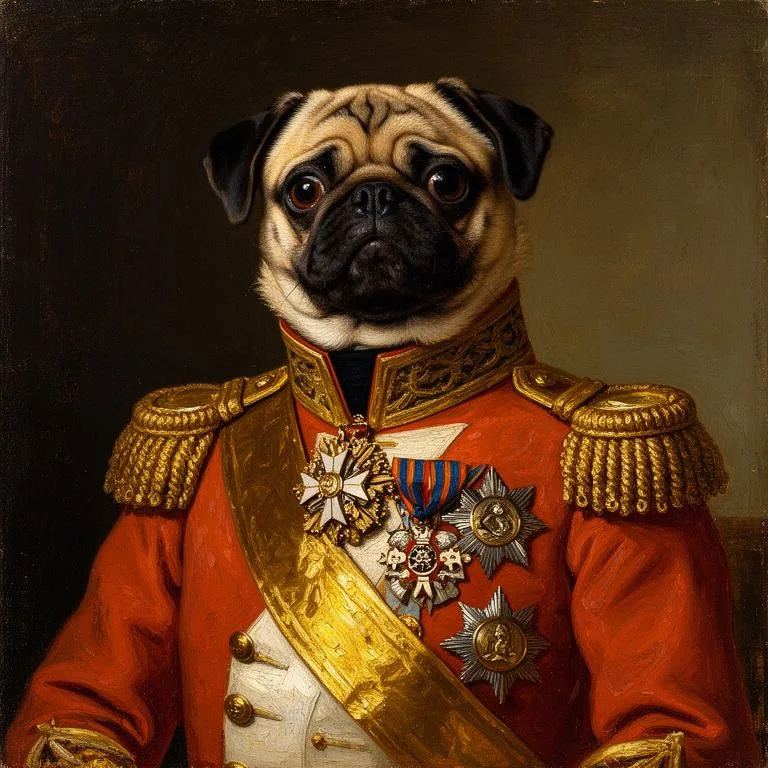
British Breeds, by Portrait Style
Six of the UK's most popular breeds, and a starting point for each — though the free preview remains the only real way to know for certain.
| Breed | Suggested style | Why it works |
|---|---|---|
| Labrador Retriever | Aristocrat | An open, friendly face carries tailored elegance without looking stiff. |
| Cocker Spaniel | Romantic | Soft ears and softer eyes suit the gentlest of the six styles. |
| French Bulldog | Baroque | A characterful, squashed face holds its own against heavy drama and gilt. |
| Border Collie | Military | An intelligent, watchful expression suits braid and formal bearing. |
| Jack Russell | Royal | Small dogs, unreasonably large opinions of themselves — crown included. |
| Cockapoo | Renaissance | A soft, textured coat photographs beautifully in the house style's warm light. |
None of this is a rule. A rescue of no fixed breed carries any of the six just as well as a Royal Kennel Club-registered pedigree; the table is a starting point for indecision, not a boundary. Two-dog households face the same question twice over, and there's no rule requiring the same style for both — a Labrador and a Cocker Spaniel from the same home can carry Aristocrat and Romantic respectively without looking like a mismatched pair, since each style is chosen for the individual dog rather than for consistency with a sibling.
How to Photograph a Dog Well
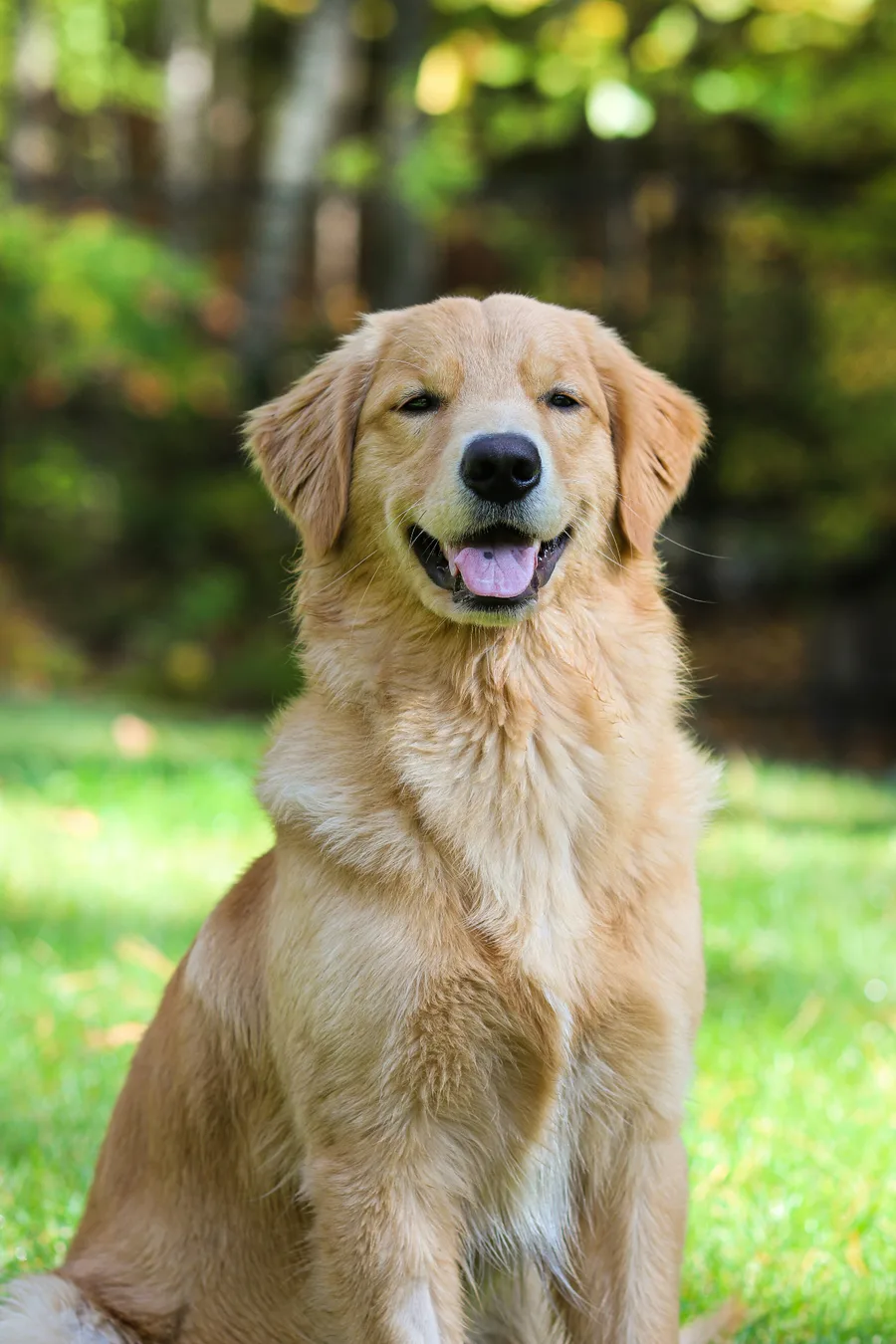
The single biggest factor in how a dog portrait turns out is the photo it's built from, and dogs are not naturally cooperative photography subjects. A few things reliably help. Get down to the dog's eye level rather than shooting from standing height — it removes the slightly comic foreshortening that makes every dog look like it has a small head and enormous paws. Use natural daylight rather than flash, which washes out darker faces and creates a startled look in pale eyes. Take far more photos than feels necessary; dogs move constantly, and the good frame is usually the fifteenth, not the first. A treat or a squeaky toy held just above the camera lens reliably produces the alert, ears-up expression that makes the strongest portraits. A plain background — a wall, a section of carpet, the inside of a car boot if that's genuinely what's available — keeps the dog as the obvious subject rather than competing with a cluttered garden. Patience matters more than equipment; a phone camera and twenty minutes of a dog simply being itself will usually beat an expensive camera and a rushed five-minute session, because the goal is one honest, sharp frame, not technical polish.
Is a Dog Portrait AI-Generated?
Yes, and it's worth saying plainly. The artwork itself is AI-powered, which is exactly what allows Fur d'Amore to show a free preview of your actual dog, in the actual style, before any payment. A traditional commissioned-painting studio can promise a likeness; Fur d'Amore lets you see one first. What isn't automated is what happens once you say yes: the print itself, made to an archival, giclée-grade standard, then set into a heritage frame — physical steps applied to a file only after approval. Fur d'Amore is rated 4.9/5 by 10,000+ customers — plenty of them, presumably, sceptical about this exact question beforehand.
The AI element also explains why an unusual-looking dog — a crossbreed with an asymmetric marking, a rescue with one ear that never quite stood up, a coat colour that doesn't fit a standard breed description — isn't a problem the way it might be for a studio working from a limited set of stock templates. The image is generated from that specific dog's specific photo, quirks included, which is rather the point of ordering one in the first place.
What a Dog Portrait Looks Like on a British Hallway Wall
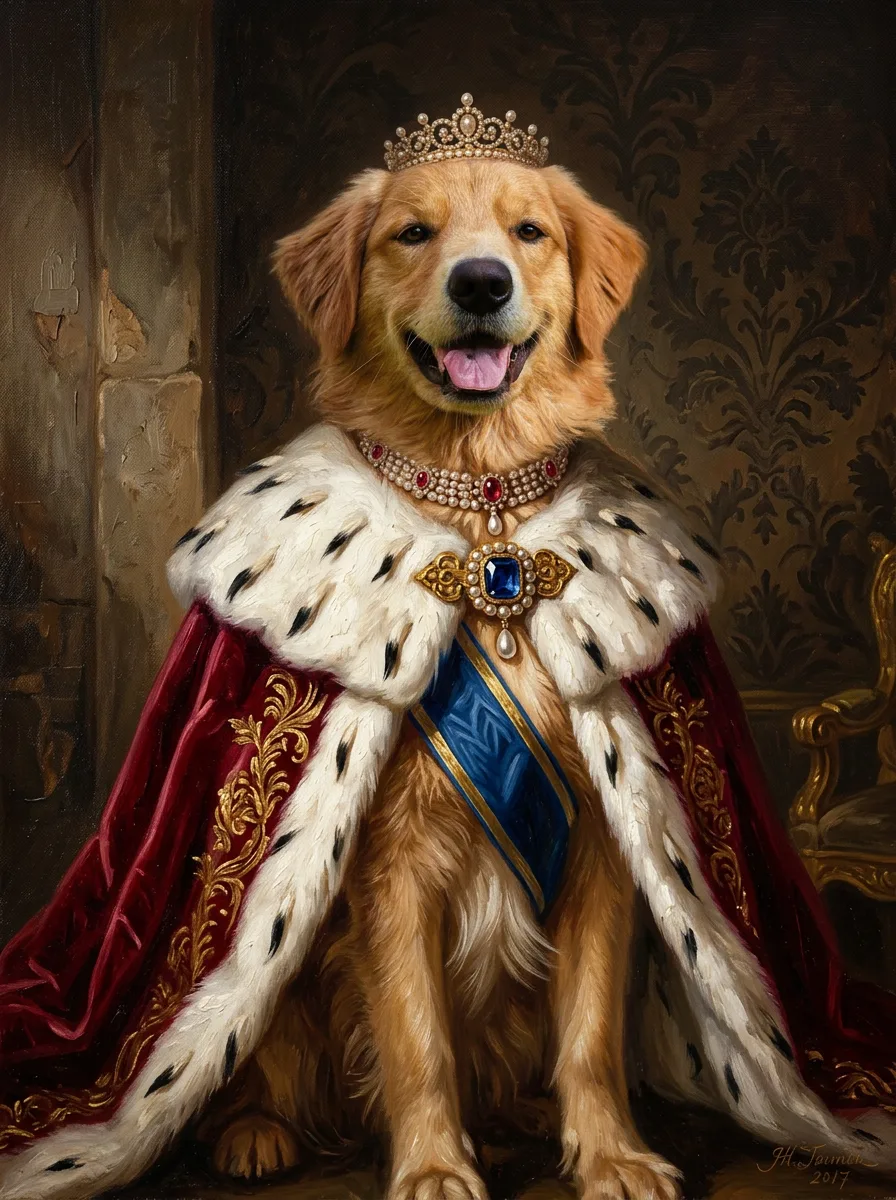
Most UK homes don't have a spare wall the size of a gallery room, and a dog portrait doesn't need one. A single canvas above the hallway console table, or on the landing where everyone passes it on the way upstairs, tends to work harder than the same piece would in a room nobody sits in. A narrow terraced hallway — the classic British layout, one wall, limited width — actually suits a single striking portrait rather than a gallery wall of many small frames; there's only room to look at one thing properly, so it should be a good one. For a home office tucked into the box room, a smaller desk portrait does the same job at a fraction of the space. Above the fireplace works too, though it's worth measuring twice — a dog portrait that's slightly too small over a large mantelpiece reads as an afterthought, where the same canvas at the right scale reads as the room's actual centrepiece.
Whichever wall it's headed for, the subject deserves care beyond the frame. The Dogs Trust and the RSPCA both publish sound general advice for dog owners, portrait or no portrait, and the British Veterinary Association is a good source if a photography session ever raises a genuine health question — a dog reluctant to sit still is usually just being a dog, but not always.
Pricing and Delivery to the UK
Dog portraits sit on the same UK price ladder as every other Fur d'Amore piece rather than being priced by breed or size of animal: a digital download starts at roughly £15, desk portraits and plain canvas fill the middle of the range, and a heirloom-framed canvas at the top tier reaches about £226. Every figure is shown in pounds and tracks exchange rates. Fur d'Amore ships to the United Kingdom. Digital downloads are available instantly; printed and framed portraits take 5–7 business days for production, and international delivery typically takes 7–14 business days, as stated in the questions section of the Fur d'Amore homepage.
A parcel arriving from outside the UK can be subject to general import VAT and duty rules once its value crosses certain thresholds — this isn't specific to dog portraits, it's how HMRC treats overseas goods generally. GOV.UK has the detail, worth reading before any overseas order.
A dog portrait suits most of the UK's gifting calendar — Christmas, Mothering Sunday, Father's Day, a birthday, or no occasion beyond the dog deserving it. The full category guide sits at pet portraits, with every style laid out side by side at the portraits collection. A cat sharing the same household gets its own guide at cat portraits, and the people in that household at custom family portrait. A dog nearing the end of its life is a different, gentler subject, handled separately at dog memorial gifts — and the complete UK collection sits at the Fur d'Amore UK hub.
Sources and further reading
Frequently asked questions
What's the difference between a dog portrait and a regular pet portrait?
Nothing structural — a dog portrait uses the same six styles, archival canvas and free preview as any Fur d'Amore piece. The difference is emphasis: dog-specific guidance on which style suits which breed, how to get a decent photo of a dog that won't sit still, and where a finished portrait actually works on a British wall.
Which Fur d'Amore style suits my dog's breed?
It depends more on temperament than breed, though breed is a reasonable starting point: Aristocrat suits an open, friendly face like a Labrador's, Military suits a watchful Border Collie, Royal suits a small dog with a large opinion of itself like a Jack Russell, and Romantic suits gentle-eyed breeds like the Cocker Spaniel. The free preview settles any doubt.
How do I get a good photo of a dog that won't sit still?
Get down to the dog's eye level, use natural daylight rather than flash, and take far more photos than feels necessary, since dogs move constantly and the best frame is rarely the first. A treat or squeaky toy held above the camera lens usually produces the alert expression that makes the strongest portraits.
Does Fur d'Amore deliver dog portraits across the UK?
Yes, Fur d'Amore ships to the United Kingdom and every price displays in pounds. Shipping is calculated at checkout before payment. For parcels arriving from outside the UK, general UK import VAT and duty rules can apply above certain values, as HMRC's published guidance explains.
What's a good UK occasion for a custom dog portrait?
Christmas and Mothering Sunday in March are the two busiest, with Father's Day in June close behind for portraits featuring Dad's dog specifically. Because the portrait is previewed free before payment, there's little risk in buying ahead of a date — you already know what's arriving before you wrap it.