Pet Portraits: Choosing the Right Format for Your Home
A pet portrait is not really a decision about art style — it is a decision about format, and in Australia that choice matters more than which of the six styles gets picked afterwards. Before any of that, it is worth asking a blunter question: is a portrait actually the right gift for the person or the wall in mind? Fur d'Amore previews the finished piece free, in Australian dollars, before you commit to a digital file, a desk portrait, a canvas or a framed heirloom.
Is a Pet Portrait Actually the Right Gift?
Before choosing a format, it is worth asking a blunter question first: does this particular person actually want a portrait of their pet on a wall, or would they rather have something more useful? Not everyone does, and that is a fair answer. A portrait suits someone who already has photos of the dog stuck to the fridge, who mentions the cat unprompted in most conversations, who would notice a genuine likeness and be quietly undone by it. Most of what hangs in a serious collection — the Art Gallery of New South Wales included — is somebody's commissioned likeness, chosen because the sitter mattered enormously to somebody. A pet portrait works on exactly the same logic, just at a smaller and considerably more affordable scale.
It suits a milestone more than a passing thought: a first Father's Day with a new puppy, which in Australia falls on the first Sunday in September rather than the northern-hemisphere date search results sometimes assume, a significant birthday, a housewarming into a first unit, or genuinely no occasion at all beyond a spare evening and a good photo already sitting on someone's phone. It suits some households less well — a share house where the pet technically belongs to everyone in particular is a harder sell than a home with one unmistakable pet person, and a portrait bought purely to fill wall space tends to show. For gift ideas beyond a single portrait, personalised pet gifts covers the wider range.
The Four Formats: What You're Actually Choosing Between
Six styles get most of the attention online, but the decision that actually shapes a pet portrait as a gift is format, not style — the same image becomes four genuinely different objects at four different price points and four different levels of commitment. A pet portrait, in the strict sense of portraiture, treats the animal as a considered individual subject rather than a type, and that idea holds regardless of which of the four formats below ends up carrying it.
A digital file is the lightest touch: a finished image with nothing physical attached, useful for printing later, using as a phone background, or simply seeing the result without committing to wall space. A desk portrait is the next step up — small enough for a shelf or a work desk, considered without asking the recipient to rearrange a room around it. Canvas is the default choice for an actual wall: a stretched, finished piece sized for a hallway or above a sideboard. A heirloom frame is the version bought when the occasion itself is the point — a significant birthday, a pet's tenth year, a piece meant to outlast a house move or two.
| Format | From (AUD) | Suits |
|---|---|---|
| Digital file | $28 | A low-cost gift, or printing it yourself later |
| Desk portrait | $113 | A shelf, a desk, a study — no wall space needed |
| Canvas | $184 | The main wall piece, ready to hang as it arrives |
| Heirloom framed | $284 | A milestone gift, kept and handed down |
Prices move with exchange rates and the exact figure is confirmed at checkout; the table shows where each format starts on the Australian ladder, not a fixed final price. Optional gift wrapping is available too, worth knowing about before a parcel turns up looking like, well, a parcel.
A Word on Style
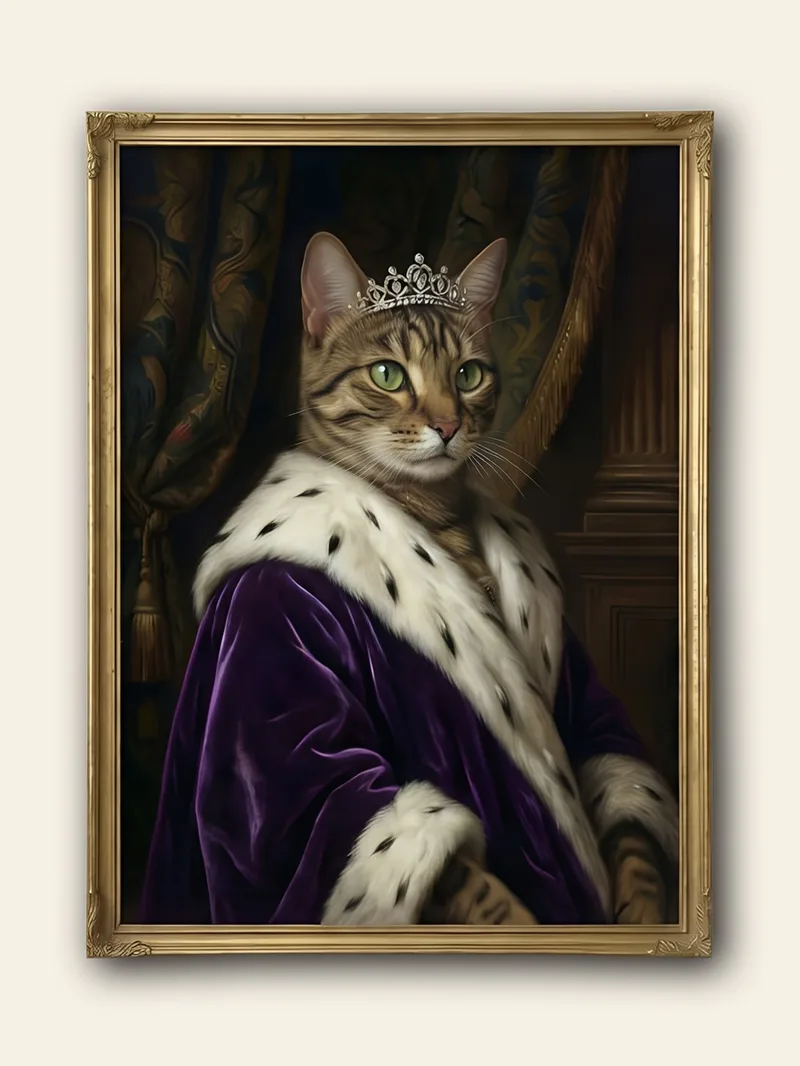
Once format is settled, style is the enjoyable decision rather than the difficult one. Royal, Aristocrat, Renaissance, Baroque, Military and Romantic each pull the same photo toward a different mood — crown-and-ermine grandeur at one end, the quieter tailoring of Aristocrat at the other — the same range of moods institutions from the National Portrait Gallery in Canberra to the Rijksmuseum have built entire collections around. There is no correct pairing of pet to style — a scruffy rescue carries Baroque as convincingly as a show-ring cavoodle carries Aristocrat — so rather than reading six descriptions and guessing, the free preview lets you see your own pet in each one and simply pick whichever result actually works.
The One Factor That Actually Decides Quality
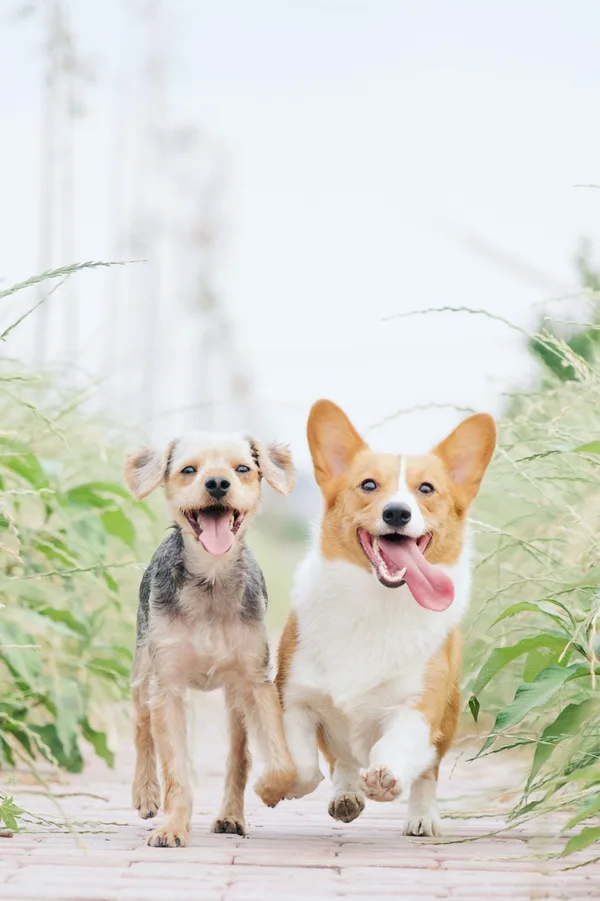
Format and style get chosen deliberately; the source photo usually does not, and it is the single biggest predictor of how the finished piece turns out. A sharp, front-on, well-lit photo of the face — the kind most phones already have somewhere in the camera roll — produces a result that looks unmistakably like the animal in question. A blurry action shot, one taken from above, or a face half lost in shadow gives the process far less to work with, whatever style or format is chosen around it afterwards.
Multiple photos help when more than one subject is involved — a dog and a cat together, or a pet alongside its owner — since each subject needs to be clearly visible in at least one frame rather than half-hidden behind someone's elbow. Uploads accept JPG or PNG up to 10MB, and everything uploaded stays private throughout. The animal behind the photo deserves more than a good angle, too — general welfare advice from RSPCA Australia is worth a look regardless of whether a portrait is ever ordered.
Seeing It Before You Pay: How to Judge a Free Preview
The preview exists because the artwork itself comes from an AI model rather than a paintbrush — that is not a caveat, it is the entire reason a free look at the actual finished piece is possible before any money changes hands. A traditional commissioned-painting studio can only promise a likeness in advance; this shows the result first, generated from your specific photo rather than a stock example, and nothing is charged until it is approved.
Judging a preview well means checking past the mood of the style to the fundamentals underneath it: does the animal's face read as recognisably theirs, not just a pet in general? Are the markings, the ear shape, the particular tilt of the head all present? A preview that nails the atmosphere but loses the specific animal is worth trying again with a sharper source photo before deciding on format entirely. What follows approval is not automated at all — archival canvas printing and heirloom framing are physical processes, applied only once the digital image is signed off. Fur d'Amore is rated 4.9/5 by 10,000+ customers, most of whom presumably judged their own preview by exactly this standard before anything was printed.
Ordering From Overseas: What Australian Buyers Should Know
Fur d'Amore ships to Australia, and every price displays in Australian dollars from the outset, with shipping calculated at checkout before payment is taken. Digital downloads are available instantly; printed and framed portraits take 5–7 business days for production, and international delivery typically takes 7–14 business days, as stated in the questions section of the Fur d'Amore homepage.
For parcels arriving from overseas, it is worth understanding the general Australian rule for low-value imports rather than assuming the worst: consignments with a customs value of A$1,000 or under generally are not charged duty, GST or clearance fees at the border, since GST on smaller purchases is handled by the seller rather than the parcel being held up for assessment. Australia Post's guidance for buyers ordering from overseas covers the current detail and is worth checking before any overseas order, this one included.
None of this is unique to pet portraits — it is simply how a smaller parcel generally clears into Australia — but it is worth knowing before checkout rather than discovering it afterwards. The free preview happens well before this stage, so by the time shipping is even calculated, the only real decision left is which of the four formats to choose.
Living With It in an Australian Home
An Australian home tests a framed piece harder than a British or Canadian one typically does. Direct sun through an unshaded window fades paper and cheap ink fast, and conservation guidance from institutions like the Getty treats light exposure as one of the two things that age an original piece faster than almost anything else. Archival, giclée-grade printing is built to resist exactly this, which matters more on a north-facing wall catching sun for half the afternoon than it does anywhere shaded.
Humidity is the other half of the problem, and it is the reason serious galleries such as the National Gallery of Victoria control it so carefully. Coastal salt air is hard on paper and harder still on the glue and joints of a cheap frame; a beach house is not a forgiving environment for a bargain print bought without much thought.
Where it actually goes matters too, and Australian homes tend to have fewer obvious gallery walls than the phrase suggests. The lounge room does most of the work in most houses; a hallway in a Queenslander, where everyone passes it on the way to the kitchen, tends to earn its place better than a formal room nobody sits in. Above the sideboard is the classic spot for a reason, and a study or home office suits a smaller desk portrait when a full canvas would overwhelm the room.
For style-specific detail once format and style are both settled, see dog portraits and cat portraits, or compare every style at the full portraits collection. Sizing and process questions are covered in the FAQ, and the Australian hub holds the complete price ladder and every related page in one place.
Sources and further reading
Frequently asked questions
What's the actual difference between the four pet portrait formats?
Format decides how the finished piece gets used, not just its price. A digital file is just the image, useful for printing yourself or sharing digitally. A desk portrait suits a shelf or study. Canvas is the standard choice for a wall. A heirloom frame is the version meant to last, chosen for a milestone rather than a passing gift.
Is a pet portrait actually a good gift, or just a nice-sounding one?
It suits someone who already talks about their pet, not someone being given wall decoration for its own sake. It works especially well for a milestone — a first Father's Day with a new dog, which in Australia falls in September rather than June, a big birthday, or simply a very good photo already sitting on someone's phone.
What actually makes a pet portrait look like my specific pet?
The source photo matters more than style or format. A sharp, front-on, well-lit shot of the face gives a noticeably stronger likeness than a blurry action shot or one taken from above. Multiple photos help for a group portrait, since each subject needs to be clearly visible in at least one frame before the image is generated.
Do I get to see the portrait before paying, and is it AI-generated?
Yes to both. The artwork is generated by AI from your own uploaded photo, which is exactly what makes a free preview of the actual result possible before any payment. Only once that preview is approved does the physical work begin — archival canvas printing and heirloom framing, priced and shown in Australian dollars throughout.
Does Fur d'Amore ship pet portraits to Australia, and what about import duty?
Yes, Fur d'Amore ships to Australia with every price shown in Australian dollars and shipping calculated at checkout. For parcels arriving from overseas, the general Australian rule for low-value imports can apply: consignments valued at A$1,000 or under typically clear without extra duty, GST or clearance fees at the border.