Personalised Pet Gifts: A Five-Question Test for Australian Buyers
Before buying anything in Australia labelled "personalised", ask one question: would the product change in any real way if you swapped in a different pet's photo? If the honest answer is "barely", you're paying for a name, not a likeness — worth knowing before the money leaves your account. What follows is a five-question test any Australian buyer can run on a personalised pet gift in under a minute, what actually clears it, and when Australians tend to be buying this kind of thing in the first place.
Why "personalised" deserves some scepticism
The word gets stretched to cover almost anything. A phone case with a stock paw-print graphic and your dog's name typed underneath is technically personalised — the name is yours, even if nothing else about the object is. A photo dropped into a fixed border and printed onto a mug is personalised in the same thin sense. None of this is fraud, exactly; it's just that "personalised" has become a label sellers apply to justify a markup, rather than a description of what actually happened to your photo once you uploaded it. Since the word is doing so much marketing work, it's worth an Australian buyer treating it the way you'd treat any other claim on packaging — checkable, not assumed.
It matters more for a pet gift than for most other categories, because the whole appeal rests on a claim of specificity. A jumper knitted with a stranger's name would be obviously wrong to give as a gift; a mug printed with the wrong dog's name is just as wrong, it's simply cheaper to get away with. Running the test before paying protects against spending real money on something that, underneath the marketing, looks exactly like the ungenuine version.
The five-question test
Run any "personalised" pet product through these five questions before paying. A genuine one should clear all five without much hesitation, and none of them require special knowledge — just close attention to what's actually on offer, and a willingness to ask the seller directly if it isn't obvious from the listing.
1. Would the product change if you swapped in a different pet's photo? If a different dog's photo would produce an almost identical object — same layout, same graphic, only the name field updated — the personalisation is thin. It should be structurally different for every different pet, and the answer is usually obvious within a few seconds of honest thought.
2. Does the seller actually need your photo, or just a name and a breed from a dropdown? Genuine likeness requires the former. If a form only asks for text fields, no photograph is doing any work at all; a genuine seller will ask you to upload a file, not just fill in a box.
3. Does your photo become the whole piece, or a small inset over a generic scene? A photo dropped into the corner of a pre-made template is decoration. A photo used as the entire basis of the artwork is personalisation. Look at how large the finished preview of your own pet actually is, and where the upload button sits on the page.
4. Is "personalised" a small add-on fee to an otherwise identical product, or is the whole thing generated from what you supplied? A $5 surcharge for engraving a name onto a mass-produced item is one business model. Building the entire object from your pet's likeness is a different one, and it should look different too.
5. Can you see the actual result, with your actual pet, before you pay for it? Genuine personalisation is provable in advance. If a seller can't or won't show you your own pet's version before charging you, that's the clearest tell of all.
What actually passes the test
A likeness portrait clears all five without much argument. Fur d'Amore builds each portrait from an uploaded photograph — your pet's actual face, markings and expression — in one of six styles: Royal, Aristocrat, Renaissance, Baroque, Military or Romantic. The artwork itself is AI-powered, and that's stated plainly rather than hidden, because it's exactly what makes test five possible: you see a free preview of your own pet, in your chosen style, before a cent changes hands. What follows the preview is entirely physical — archival canvas printing and a heritage frame, not a print run off somebody's home printer. Popular Australian breeds translate well into the format — a Kelpie's sharp attentiveness, a Cavoodle's soft curls, a Ragdoll's calm wide face — though the process works identically for a rescue mutt with no pedigree paperwork at all.
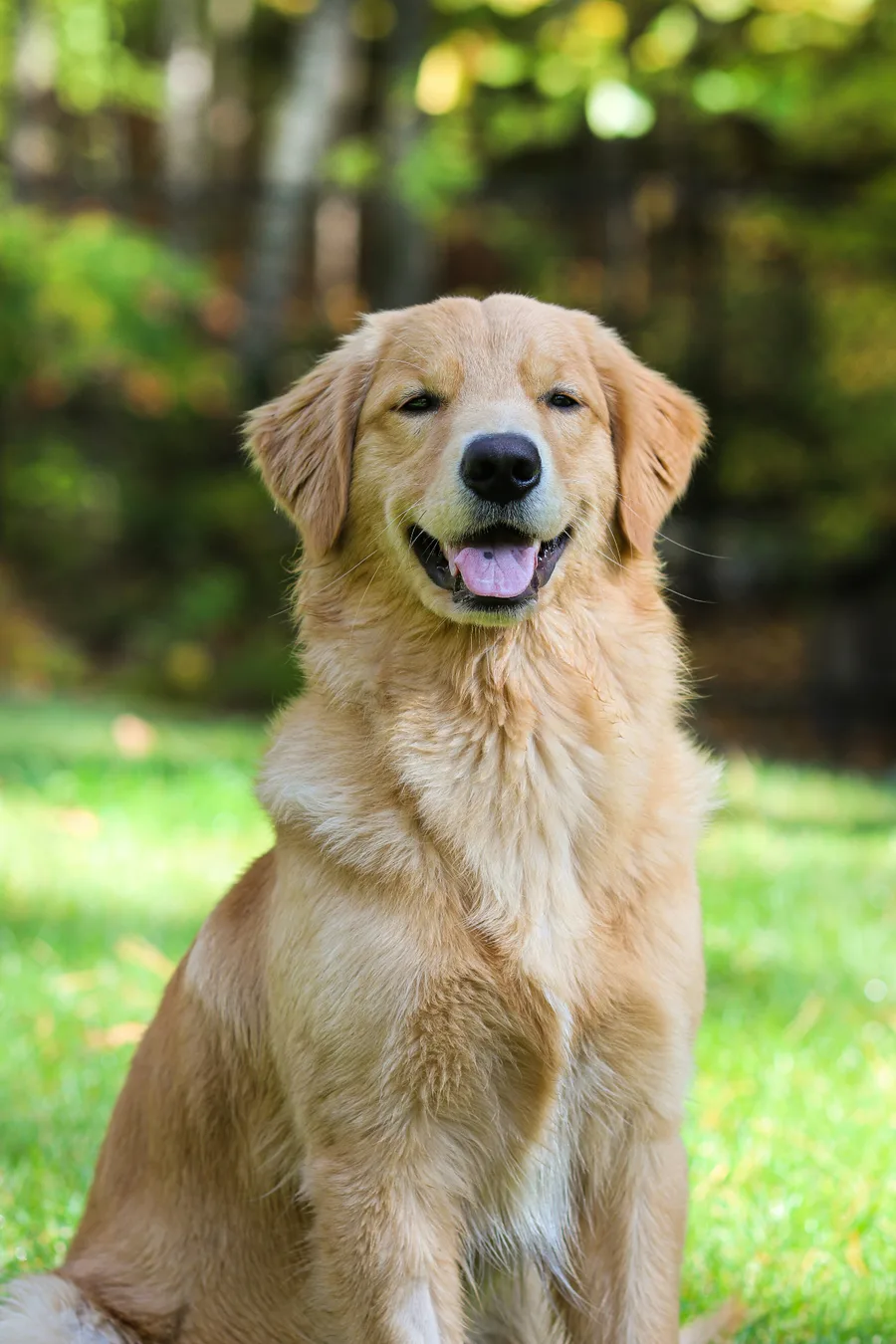
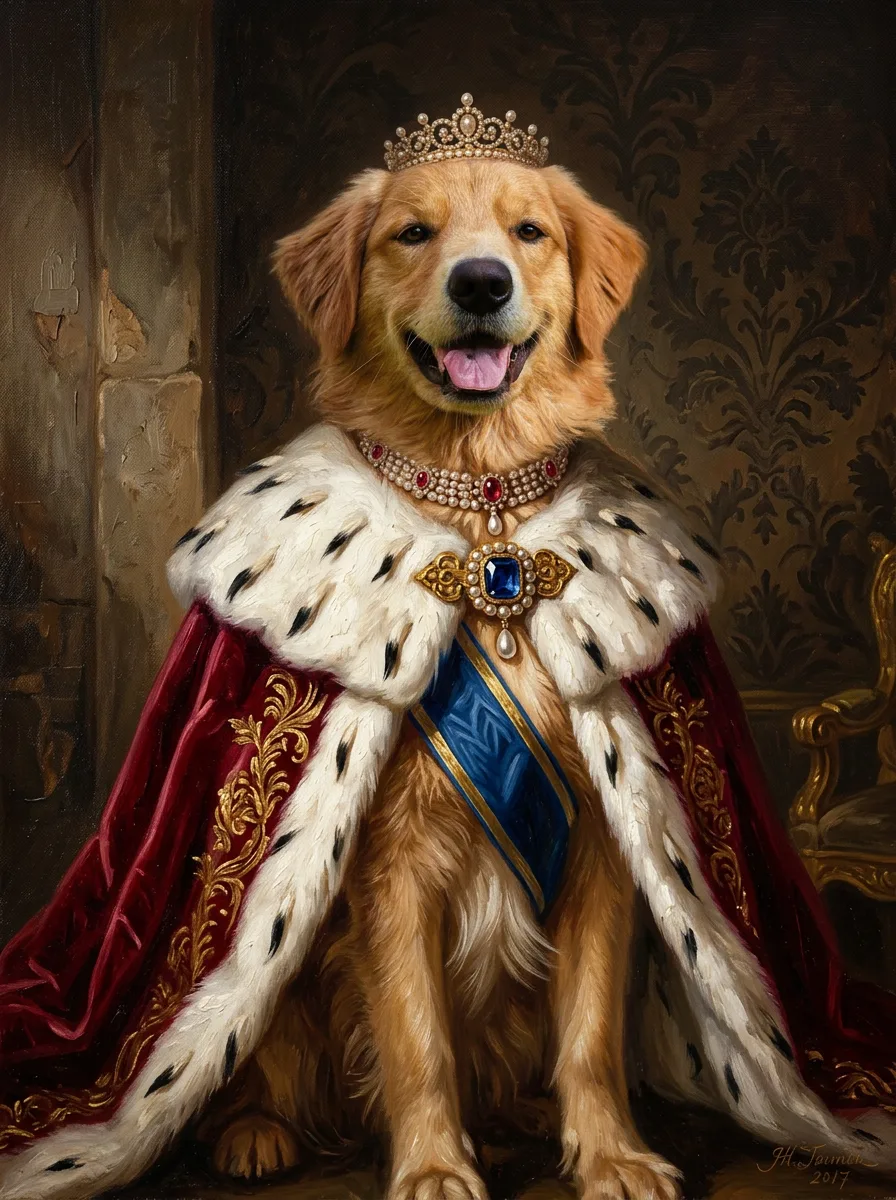
Traditional portrait painting passes the same test and always has — it's the tradition this whole category borrows from, the one on display at the National Gallery of Victoria and the Art Gallery of New South Wales. A commissioned oil painting clears every question except the fifth, usually, since a painted likeness typically can't be previewed in finished form until the artist is done, weeks after payment.
| Product | Changes with a different photo? | Uses your actual photo? | Can you preview it first? |
|---|---|---|---|
| Name-only mug or keyring | No — same template regardless | No, just a name and a breed | Rarely, and not of your pet |
| Photo-topper phone case or magnet | Only the small inset changes | Yes, but only for a corner image | Sometimes, low-resolution |
| Likeness portrait (Fur d'Amore) | Yes — the whole artwork is generated from it | Yes — the photo is the entire input | Yes, a free preview before payment |
| Traditional commissioned oil portrait | Yes, painted individually | Yes | Rarely before the finished piece, weeks later |
Where Fur d'Amore lands on its own test
It seems fair to run the same five questions against Fur d'Amore rather than only against competitors. Test one and two: the portrait is generated from your photo alone, so a different pet produces a genuinely different painting, and there's no dropdown standing in for the real thing. Test three: your photo isn't an inset, it's the entire source of the artwork. Test four: the fee isn't an add-on to a mass product; the whole object is built to order. Test five: a free preview appears before payment, every time, with no exceptions for size or style. Fur d'Amore is rated 4.9/5 by 10,000+ customers, though the preview itself is really the more useful evidence — it lets you judge the likeness yourself rather than take anyone's word for it, including this page's.
None of this is a claim that every seller of a printed mug is trying to mislead anyone — a name-only item is often exactly what it looks like, sold honestly as a small, inexpensive thing. The problem arises only when a seller lets the word "personalised" imply more than that, and charges accordingly for the implication rather than the substance. Running the test costs nothing and takes less time than reading the product description twice.
The process works for more than dogs and cats. Kelpies, Cavoodles, Staffies and Border Collies make up plenty of orders, but rabbits, horses, guinea pigs and birds pass exactly the same test — what matters is a clear, well-lit photo of the face, not the species behind it. General welfare guidance from RSPCA Australia, Dogs Australia and the ASPCA's dog care guides covers most breeds in useful depth, and Humane World covers a considerably wider range of animals besides.
When Australians actually buy this
Mother's Day, on the second Sunday in May, is by some distance the busiest stretch for a personalised pet portrait — a tribute to whoever ends up walking the dog most mornings regardless of whose day it officially is. Father's Day follows on the first Sunday in September, not June, which trips up gift guides written for the wrong hemisphere's calendar. Christmas brings its own spike, arriving in the middle of an Australian summer with lunch outdoors rather than anywhere near snow, and Boxing Day — with the cricket on in the background — is a quieter second wave for people using vouchers or simply getting round to it. Birthdays and gifts given for no particular reason besides affection round out the rest of the year. None of these dates demand rushing the decision — a free preview means the likeness can be checked well ahead of whichever date it's needed for, with the order placed only once it's actually approved.
Buying with confidence in Australia
Fur d'Amore ships across Australia, with every price shown in Australian dollars and shipping calculated at checkout before you commit to paying. Digital downloads are available instantly; printed and framed portraits take 5–7 business days for production, and international delivery typically takes 7–14 business days, as stated in the questions section of the Fur d'Amore homepage. Prices run from around $28 for a digital download to about $426 for the largest heirloom-framed canvas, with desk portraits and plain canvas sizes in between; prices move with exchange rates, so the figure at checkout is the one that actually matters. For parcels arriving from overseas, a general rule is genuinely useful to know: consignments valued at A$1,000 or under typically aren't charged duty, GST or clearance fees at the Australian border, with Australia Post's guidance on international parcels setting out the general position, and that threshold covers every product in Fur d'Amore's range, including the largest heirloom-framed canvas. Questions about sizing or the ordering process are answered in the FAQ, and broader gift ideas beyond a single portrait sit at gifts for dog lovers and gifts for cat lovers.
Sources and further reading
Frequently asked questions
How can I tell if a "personalised" pet gift is genuine, or just a name printed on something?
Run the swap test: would the product change in any real way if you used a different pet's photo? If the honest answer is barely, you're paying for a name, not a likeness. Genuine personalisation needs your actual photo as raw material, not just a name and a breed picked from a dropdown.
Is a mug with my pet's name on it actually a personalised gift?
In the loosest sense, yes — the name is genuinely yours. But it fails the deeper test: swap in a different pet's name and nothing else about the object changes. A properly personalised gift is built from your pet's own photo, so the finished piece looks different for every pet.
Does Fur d'Amore's portrait use AI, and does that make it less personalised?
The artwork is AI-powered, and that's stated plainly rather than hidden — it's what makes a free preview of your own pet possible before you pay anything. The personalisation isn't about who renders the image; it's that the whole piece is built from your pet's actual photo, not a stock template.
When do Australians typically buy personalised pet gifts?
Mother's Day in May is the busiest stretch, followed by Father's Day on the first Sunday in September and the Christmas and Boxing Day period, which falls in the middle of an Australian summer rather than anywhere near winter. Birthdays and gifts given for no particular reason make up the rest of the year.
Does Fur d'Amore ship personalised pet portraits within Australia, and will I owe import charges?
Yes. Fur d'Amore ships to Australia with every price shown in Australian dollars, and shipping is calculated at checkout before payment. Parcels valued at A$1,000 or under generally aren't charged duty, GST or clearance fees at the border, under the general rule for low-value overseas purchases.