Cat Portraits: Five Personalities and Their Styles
A cat portrait works best when the style is matched to the cat's actual personality rather than its breed, since most Australian cats are moggies with no pedigree to consult anyway. Five recognisable types cover most households, each suited to a different Fur d'Amore style and a different kind of photograph. Because most Australian cats now live indoors or under a council curfew, getting that photograph is easier than it looks — upload it, preview the result free, and pay only once it is right, in Australian dollars.
The Aloof One Who Tolerates You
This cat allows the household to continue operating, on the clear understanding that it is doing everyone a favour. It will sit near you, occasionally on you, and will not perform affection on command for a camera or anyone else. Aristocrat suits this temperament precisely — quiet grandeur, tailoring rather than a throne, built for a subject who would not be seen dead in anything as try-hard as a crown. It is the kind of composed indifference a portraitist at the Art Gallery of New South Wales would recognise instantly. The photograph that actually captures this type is not a posed one; it is the rare, unguarded moment it makes eye contact first, before remembering itself and looking away. Wait for that half-second rather than chasing a smile that was never going to happen.
The Chaos Agent
This cat has never walked past a Christmas tree, a full glass or an open drawer without incident, and treats the house as a stage built for its benefit. Royal is the obvious pairing — not because the behaviour would pass muster at the National Portrait Gallery in Canberra, but because the confidence certainly would. Crown-and-ermine grandeur suits an animal that has never once doubted its right to be exactly where it is, doing exactly what it is doing. The photograph worth chasing is not mid-chaos, which mostly produces blur; it is the split second directly after, when the cat has landed, paused, and is surveying the damage with total composure. That pause rarely lasts longer than a second, so more photos than feels reasonable, taken as a continuous burst, beats one careful attempt every time.
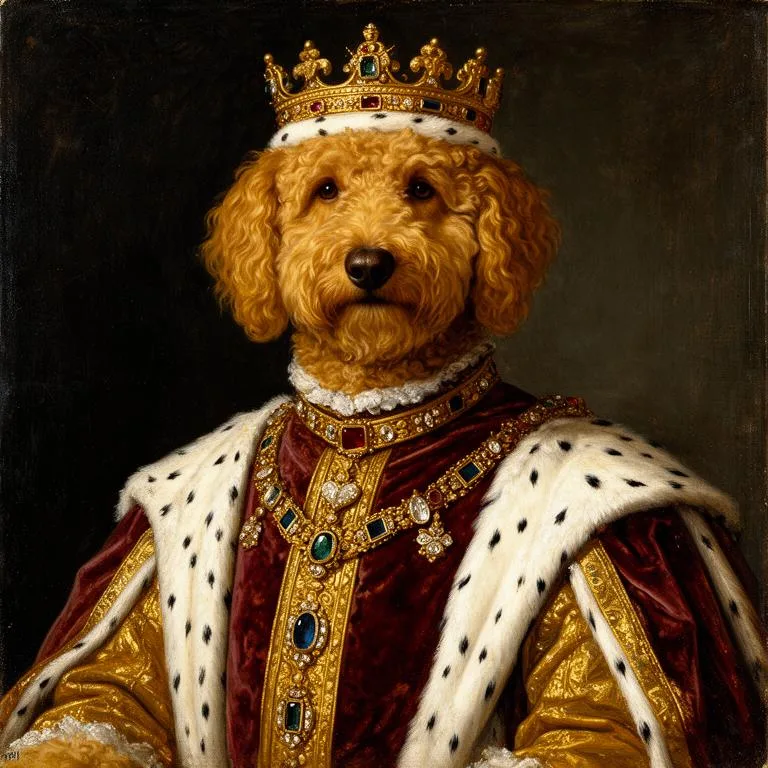
The Ancient, Dignified One
Older cats slow down in a way that photographs beautifully, if anyone bothers to notice. This is the cat that has technically outlived several sofas, holds long eye contact without blinking first, and moves through the house like it already knows exactly where it is headed. Renaissance — the house style, and the one that borrows most directly from genuine Renaissance art — suits this type especially well, the kind of timeless mood the National Gallery of Victoria has entire rooms devoted to. This is also, happily, the easiest of the five to photograph: a cat content to hold a position in a warm patch of sun for twenty minutes gives far more usable frames than one that has already gone before the lens is raised. Older cats are also, unfairly, the hardest to rehome — RSPCA Australia's adoption pages are worth a browse for exactly that reason, whether or not a portrait is ever ordered.
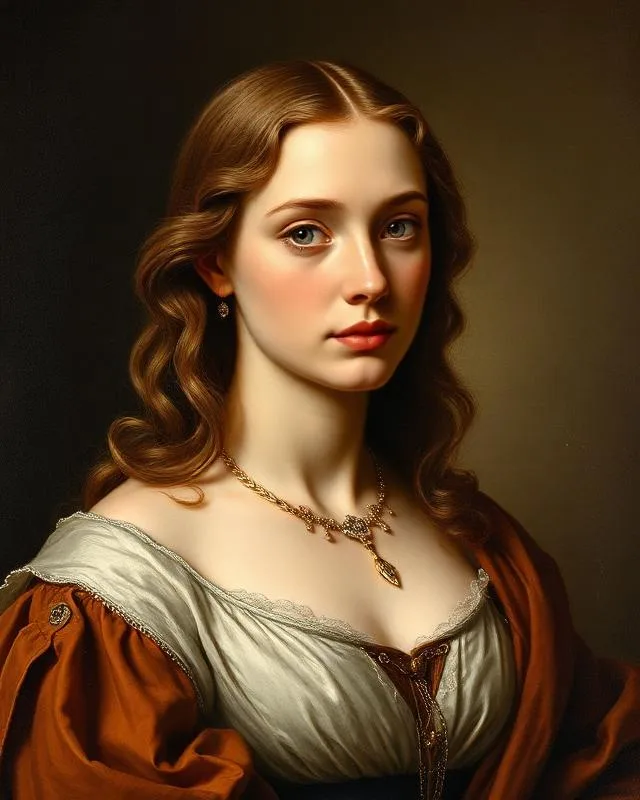
The One Who Only Materialises at Dinner
Some cats are more rumour than resident. This one is seen at approximately one reliable moment each day — the sound of a tin opening — and otherwise conducts its business somewhere unseen, on a schedule known only to itself. Baroque suits this type unexpectedly well: deep shadow and dramatic gilt, the same drama collections like the Rijksmuseum built entire wings around centuries before anyone thought to point a camera at a cat, reward an animal that already understands the value of a good entrance. The photograph that actually works here is opportunistic rather than planned — a phone kept genuinely close to the food bowl, since the one guaranteed sighting of the day is also the only reliable chance at a photo. Waiting anywhere else in the house tends to be a waste of everyone's time.
The Enormous Fluffy One
This cat is less an animal than a piece of furniture that occasionally blinks. Ragdolls run to this type especially — famously large, famously placid, the sort of cat that goes agreeably limp when picked up and stays that way. Romantic suits the temperament well: it is the softest of the six styles, built for a subject whose entire personality is gentle bulk. The photographic trap with this type is cropping too tight, which turns an impressively large, plush animal into an unreadable close-up of texture; stepping back further than instinct suggests, so the whole shape of the cat is actually visible in frame, does more for the final portrait than a closer, more detailed shot ever will.
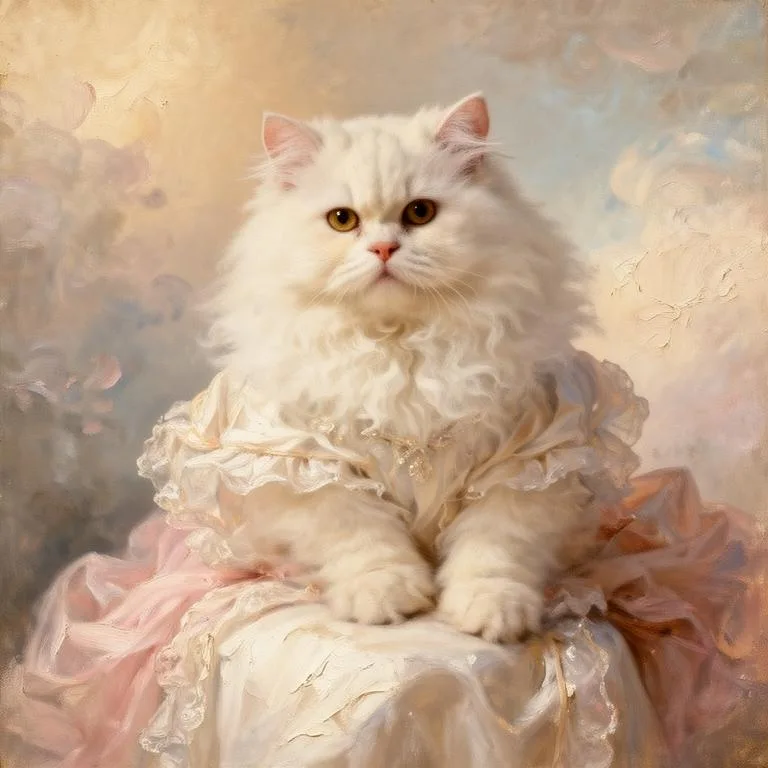
Five types, five styles, and five specific portraits waiting to happen, whichever one actually lives in the house:
| Personality type | Suggested style | The photo to catch |
|---|---|---|
| The aloof one who tolerates you | Aristocrat | The half-second of genuine eye contact |
| The chaos agent | Royal | The composed pause right after the mess |
| The ancient, dignified one | Renaissance | A held pose in a warm patch of sun |
| The one who appears at dinner | Baroque | The one reliable sighting, by the food bowl |
| The enormous fluffy one | Romantic | A wider shot that shows its full size |
Whichever type ends up on the wall, the finished piece is printed to an archival, giclée-grade standard regardless of which of the five it turns out to be. The image itself comes from an AI model working from your own photo rather than a template, which is exactly what makes a free preview possible before any payment; Fur d'Amore is rated 4.9/5 by 10,000+ customers, plenty of whom presumably fought their own cat for that one usable photo first. The six-style range leaves room to disagree with this table entirely — the free preview is the only opinion that actually counts.
Photographing an Indoor or Curfew Cat
A growing number of Australian councils now require cats to be contained to the property, whether that means a fully indoor life or an overnight curfew timed around when local wildlife is most active — general advice on this is published by bodies including RSPCA Australia, alongside individual council rules. Treated as a photography brief rather than a restriction, it is a genuine advantage: the subject is not three backyards away, gone for the afternoon, or operating on a schedule nobody else knows. It is on the other side of the same lounge room, in light you have had months to learn, at hours you can actually predict.
An outdoor, free-roaming cat offers novelty — different fences, different gardens, occasionally a dramatic tree — but novelty is not what makes a good photograph; familiarity is. An indoor or curfew cat means the same few square metres get photographed repeatedly, which sounds limiting and is actually the opposite: you learn exactly which windowsill catches the best afternoon light, which armchair the cat treats as its own, and which five minutes after dinner it is reliably too drowsy to move. Bright natural daylight matters more than any camera setting, so working with wherever the cat has already chosen to sit beats trying to relocate it. Get down closer to the cat's own level rather than shooting from standing height, and skip the flash entirely — it startles a cat and produces the same glassy stare in a photograph that it does in a person, only less flattering on a cat's face. Candid, taken over several quiet days, reliably beats a single staged attempt at all five personalities above.
Pricing and Delivery to Australia
A cat portrait costs the same as any other Fur d'Amore piece, since price follows format and size rather than species: a digital file starts at around $28, running up through desk portraits and canvas to about $426 for the largest heirloom-framed piece. Every figure displays in Australian dollars and moves with exchange rates, with the exact amount confirmed at checkout. Fur d'Amore ships to Australia. Digital downloads are available instantly; printed and framed portraits take 5–7 business days for production, and international delivery typically takes 7–14 business days, as stated in the questions section of the Fur d'Amore homepage.
For parcels arriving from overseas, the general Australian rule for smaller parcels is worth knowing: consignments with a customs value of A$1,000 or under generally are not charged duty, GST or clearance fees at the border, since GST on lower-value imports is instead collected by the seller. Australia Post's guidance for buyers ordering from overseas covers the current detail, worth a look regardless of what is being ordered.
The same five personalities turn up at Christmas — in the middle of an Australian summer rather than a cold one — at a big birthday, or on no particular date at all. The wider category sits at pet portraits, a dog in the same house has its own guide at dog portraits, and gift ideas for cat people specifically live at gifts for cat lovers. Every style sits side by side at the portraits collection, and the full Australian range is gathered at the Fur d'Amore Australia hub.
Sources and further reading
Frequently asked questions
How do I know which Fur d'Amore style suits my cat?
Personality is a better guide than breed, since most Australian cats are moggies anyway. An aloof cat suits Aristocrat's quiet grandeur, a chaotic one suits Royal's total confidence, an older cat suits Renaissance, a rarely-seen cat suits Baroque's drama, and a large, placid cat suits Romantic. The free preview settles any real doubt.
Are indoor or curfew cats really easier to photograph than outdoor cats?
Often, yes. Many Australian councils now require cats to be contained to the property, and a cat confined to one known space, in light you have had time to learn, is easier to catch mid-yawn than one that roams and appears on its own schedule. Familiar territory beats dramatic scenery for a genuinely usable photo.
My cat only shows up at dinner time — can I still get a good photo?
Yes, and that habit is actually useful. Keep a phone near the food bowl, since the one guaranteed daily sighting is also the most reliable chance at a photo. Baroque, with its deep shadow and dramatic gilt, suits this type of cat particularly well, rewarding an entrance rather than a long, cooperative sitting.
Does Fur d'Amore ship cat portraits to Australia, and how does pricing work?
Yes, Fur d'Amore ships to Australia with every price shown in Australian dollars, from around $28 for a digital file to about $426 for the largest heirloom-framed canvas. Shipping is calculated at checkout, and consignments valued at A$1,000 or under typically clear without extra duty or GST at the border.
Is a cat portrait a good gift for an Australian Christmas or birthday?
Yes — it suits Christmas in the Australian summer, a big birthday, or no occasion beyond the cat deserving it. Because the finished piece is previewed free before any payment, there is no risk of an unwanted surprise: the actual likeness is confirmed and approved well before it needs wrapping.