How Commissioning a Custom Pet Portrait Actually Works
Commissioning a pet portrait from Fur d'Amore in Australia comes down to five things: a photo, a preview, a size, a frame, and a parcel that eventually turns up. This page walks through each one in order — what to upload, what actually makes a source photo work, how to judge a free preview honestly, and what a finished heirloom-framed canvas looks like once it arrives. For what a pet portrait actually is and which of the six styles might suit a particular animal, the pet portraits guide covers that ground; this one is about the process itself, start to finish.
What Commissioning Actually Involves
"Commission" sounds like it should involve weeks of back-and-forth with a studio, a deposit, and a finished piece you don't see until it's already framed. Fur d'Amore's version is quicker and more transparent than that, precisely because the artwork stage is AI-powered: you see the actual result — this pet, in this style — before a cent changes hands, rather than trusting a written brief and a sample from someone else's dog. What follows afterwards, the archival canvas printing and the heritage framing, is where the physical craftsmanship sits, and it only begins once you've approved what you saw in the preview.
Commissioning a likeness is a very old idea, worth remembering before it feels like a strange thing to do for a pet. The National Portrait Gallery in Canberra and the National Gallery of Victoria both hold formal commissioned portraits going back centuries; this process borrows the same idea and applies it somewhere it was never traditionally allowed.
It's also a different kind of commission from a traditional one. Booking a commissioned-painting studio usually means a written brief, a deposit paid up front, and a wait measured in weeks before anything can be judged — you're trusting a description of what will be produced, not the thing itself. Here, the order of operations flips: the actual image comes first, for free, and the only thing paid for afterwards is the physical object — the canvas, the ink, the frame — once you already know exactly what it looks like.
Step One: Choosing and Uploading Your Photo
Start with what you already have rather than planning a special photo shoot. JPG or PNG, up to 10MB, is all the file needs to be, and more than one photo can be uploaded at once — useful for a group portrait, or simply to give the preview a couple of options to work from. There's no special equipment required: a bigger, sharper original file simply gives the preview more to work with than a heavily compressed one pulled from a group chat.
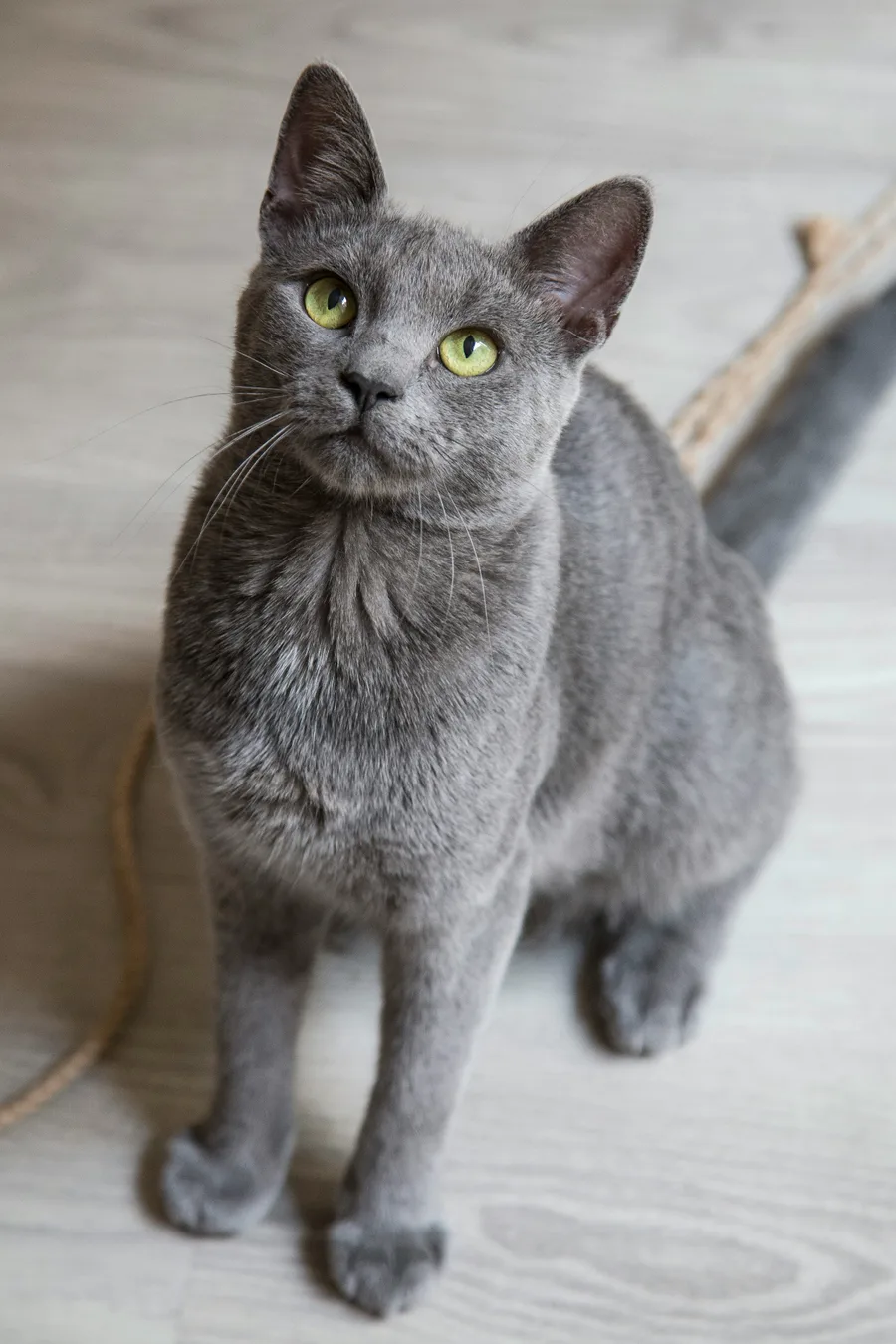
Every photo uploaded stays private throughout the process. Nothing is shared, posted or reused elsewhere — the only thing it's used for is generating your own preview.
Step Two: What Makes a Source Photo Work
Not every photo makes an equally good starting point, and it's worth a moment's thought before uploading whatever happens to already be on your phone. Front-on beats profile, since a portrait style depends on seeing the whole face plainly. Good, even light beats a dim room or heavy backlighting — a photo taken near a window in daylight usually beats an evening shot under a single lamp. A calm, still moment beats mid-action: a dog mid-zoomie across the lounge room makes for a great memory and a blurrier preview. And a plain-ish background helps, though it isn't essential, since the artwork is built from the pet's likeness rather than a straight crop of the original scene.
It's the same logic a formal sitting has always followed. The Rijksmuseum and the Getty both hold formal portraiture posed and lit with exactly this much care, long before a camera made the process quicker. This works as well for a rabbit or a horse as it does for a Kelpie or a Ragdoll — the process doesn't change by species, only the photo does. RSPCA Australia and Dogs Australia both publish general pet-care guidance worth a read regardless of whether a portrait is ever commissioned, and the ASPCA's dog care guides cover similar ground.
A few common mistakes are worth avoiding specifically. Sunglasses, hats or a lead pulled tight across the chest can obscure exactly the features a style depends on. A photo taken from directly above — the classic angle for snapping a dog from standing height — distorts proportions in a way a side-on or eye-level shot doesn't. And a heavily filtered or over-edited photo can confuse the colour reading, since the artwork works from what's actually in the file, not from a mental note of what the pet's coat "really" looks like.
Step Three: The Free Preview, and How to Judge It
The preview is the actual decision point, not a marketing formality. It's generated from your specific photo, in the style you picked, and it's worth looking at it properly rather than approving on sight out of momentum. Check the same things a portrait painter would have checked: does the shape of the face read correctly, is the colouring right, and does the expression still look recognisably like the actual animal rather than a pet in general? It's worth showing the preview to someone else who knows the animal well, too — a second opinion often catches whether a marking looks slightly off before it becomes a permanent canvas.
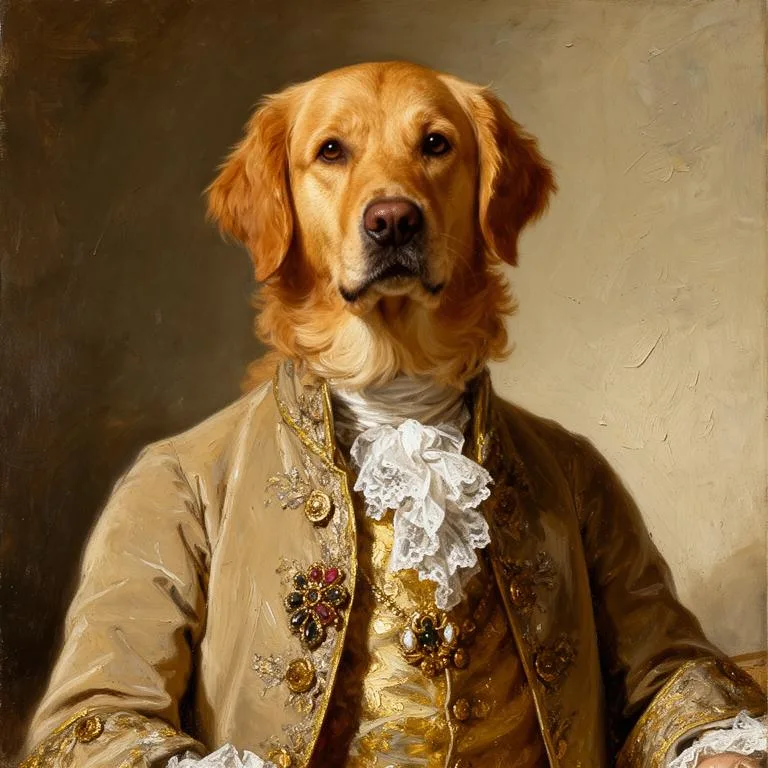
If the likeness doesn't feel right, the fix is usually the photo, not the style — a clearer, more front-on shot resolves more preview issues than switching from Renaissance to Baroque ever will. Nothing is charged until the preview is approved, so there's no cost to trying a second photo if the first attempt doesn't land. Comparing the same photo across two styles side by side, rather than judging each one in isolation, also makes it easier to notice which version actually captures the pet's particular presence rather than merely looking pleasant.
Step Four: Choosing a Size and a Frame
Once the likeness is approved, the remaining decisions are entirely physical: how big, and in what frame. Four formats sit on the ladder, from a digital file through to a fully framed heirloom canvas, and the table below sets out what each is actually suited for.
| Format | Typical size | Frame | Suits |
|---|---|---|---|
| Digital download | Print-ready file | None — file only | A quick option, or testing the likeness before committing further |
| Desk portrait | 5×7 or 8×10 | Simple desk-ready mount | A shelf, a bedside table, a desk |
| Canvas | 12×16 or 18×24 | Unframed archival canvas | A gallery-style wrap, or a frame you already own |
| Heirloom framed | 12×16 or 18×24 | Medici Gold or Milanese Walnut | The main wall, ready to hang on arrival |
The whole range runs from around $28 for a digital download to about $426 for the largest heirloom-framed canvas, in Australian dollars; prices move with exchange rates, so the live figure at checkout is what actually applies. Size is mostly a question of where the piece is going — a desk portrait suits a shelf in a study or a bedside table, while a canvas at 18×24 anchors a wall in a lounge room or a beach house on its own, without needing anything else nearby to look considered. Frame choice follows the style more than the room: Medici Gold reads as more formal, better suited to Royal or Baroque, while Milanese Walnut is quieter and tends to suit Renaissance or Romantic.
What Arrives
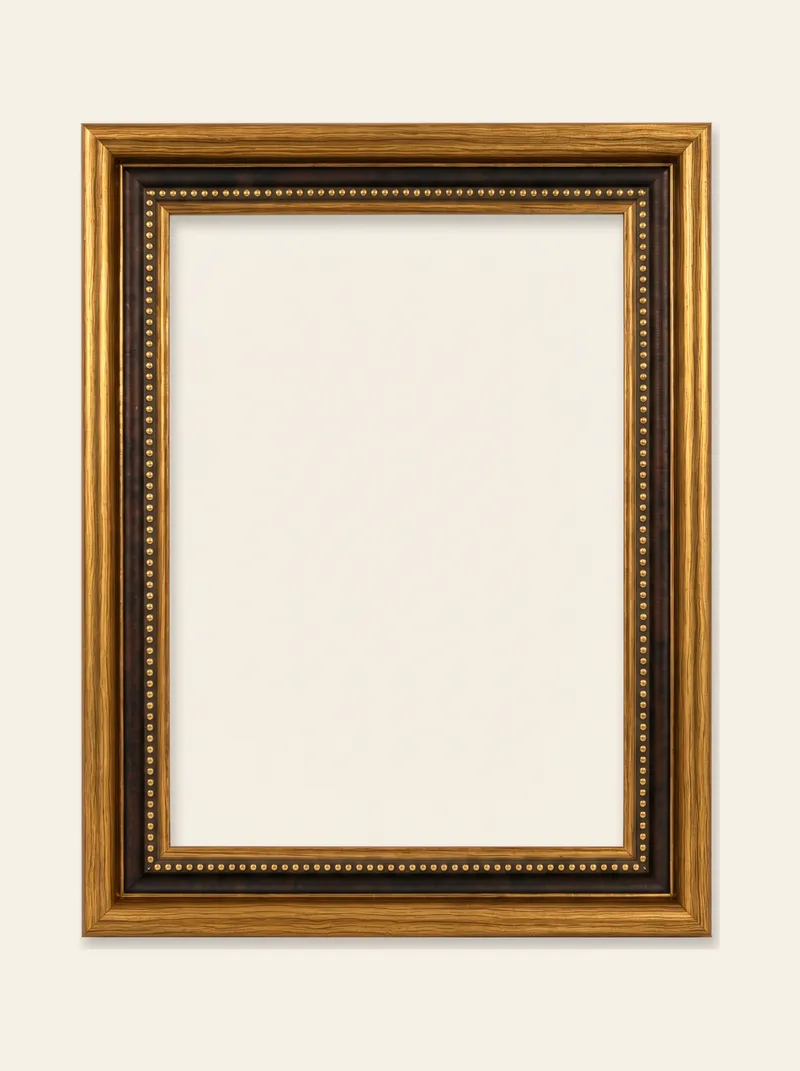
The finished piece is printed on archival canvas — giclée-quality, the same standard used for fine-art reproduction — so it's built to hold its colour rather than fade within a season. If a frame was chosen, it arrives fully assembled and ready to hang, without a separate trip to a framer first. If a digital download was chosen instead, the file arrives ready to print locally or use as it is, at whatever size suits. A heirloom frame carries real weight to it — timber and glass, not a plastic clip-frame — and the finished canvas has a visible texture rather than a flat, glossy print finish, part of what separates it from a photo enlarged to the same size. Every version, framed or not, is the same underlying artwork — the difference between tiers is entirely about the physical format, not a lesser version of the likeness.
Delivery to Australia and Timing It Around an Occasion
Fur d'Amore ships to Australia, and every price is shown in Australian dollars, with shipping calculated at checkout before payment. Digital downloads are available instantly; printed and framed portraits take 5–7 business days for production, and international delivery typically takes 7–14 business days, as stated in the questions section of the Fur d'Amore homepage. Because the preview happens before any payment, there's little downside to starting the process early — the likeness can be settled well ahead of whichever date the piece is actually needed for, whether that's a birthday, a Christmas that arrives in the middle of summer, or Father's Day in September rather than June.
For parcels arriving from outside Australia generally, consignments valued at A$1,000 or under aren't charged duty, GST or clearance fees at the border, as Australia Post's guidance sets out for overseas purchases.
For the full range of styles and a closer look at what separates a keepsake portrait from a novelty print, the pet portraits guide covers that in more depth — this page is deliberately just the process, start to finish. Breed-specific detail sits on the dog portraits and cat portraits pages, and sizing or format questions not covered here are answered in the FAQ.
Sources and further reading
Frequently asked questions
How do I commission a pet portrait with Fur d'Amore in Australia?
Upload a photo — JPG or PNG, up to 10MB — choose one of six styles, and a free preview is generated from that specific photo, priced in Australian dollars from the outset. Check the preview against the actual animal, approve it, then choose a size and frame. Nothing is charged until the preview is approved.
What makes a good source photo for a pet portrait?
A clear, front-on shot with even lighting works best, since the style depends on seeing the whole face plainly. A calm, still moment beats a mid-action shot, and a plain background helps, though it isn't essential. If a preview doesn't quite capture the likeness, a clearer photo usually fixes more than switching styles does.
How do I know if the free preview is actually a good likeness?
Check it the way a portrait painter would: does the shape of the face read correctly, is the colouring right, and does the expression still look like the specific animal rather than a pet in general? Nothing is charged until the preview is approved, so it's worth a proper look before committing to a size and frame.
What size and frame should I choose for a commissioned portrait?
It depends mostly on where it's going. A desk portrait suits a shelf or bedside table; an 18×24 canvas anchors a wall on its own. Medici Gold framing tends to suit a Royal or Baroque style, while Milanese Walnut suits Renaissance or Romantic. Heirloom-framed options arrive ready to hang, with nothing further to arrange.
Does Fur d'Amore ship commissioned portraits to Australia, and are there import charges?
Yes. Fur d'Amore ships to Australia, with every price shown in Australian dollars and shipping calculated at checkout before payment. Consignments valued at A$1,000 or under generally aren't charged duty, GST or clearance fees at the Australian border, though the exact treatment of any order is confirmed at checkout.