Gifts for Grandparents: What to Give When They Have Everything
The best gift for grandparents is the grandchildren, made into something that hangs on a wall. People who have been furnishing a house for fifty years do not need another object. They need a reason to stop in the hallway. That is the entire logic of this category: the gifts that work deliver faces, and the gifts that fail deliver stuff. What follows is which photo gifts survive past the first fortnight, how to get four grandchildren from three cities into one picture, what the market charges, and the seven checks worth making before you pay.
Why is buying for grandparents so hard?
Three reasons, and none of them is that grandparents are fussy.
The first is arithmetic. A person in their seventies has had six decades to buy every tool, sweater and kitchen gadget they wanted, usually in a better version than the one you are considering. The second is direction of travel: most households at that stage are trying to reduce, not accumulate, so a gift that needs storing is a small administrative burden dressed as a present. The third is taste. You are buying for someone whose house has been decorated to their own preferences, item by item, for longer than you have been alive.
The field narrows fast. What survives is the category of gifts they cannot buy themselves, do not have to store, and that requires no guess about their taste in objects. There is essentially one thing in it, and it is a picture of their family.
What do grandparents actually want?
Contact and evidence. Ask any grandparent and the answer arrives before the question finishes: to see more of the grandchildren. That is not sentimentality, it is logistics. Families are scattered, and a great many grandparents experience their grandchildren through a phone screen, in an album they have to remember to open, in a thread that scrolls away by Thursday.
A printed picture removes the step. It does not need to be opened, charged or found. It occupies a fixed point in the house and is looked at in passing, several times a day, for years. The same object given to a thirty-year-old would read as clutter. Given to a grandparent it reads as the point.
| Gift | Where it ends up | Honest verdict |
|---|---|---|
| Framed portrait from your photos | A wall, permanently | Strongest option. Seen daily, cannot be self-bought |
| Photo book | A shelf, opened twice | Lovely, then invisible |
| Printed mug or cushion | A cupboard | Charming for a week; wears out |
| Wall calendar | The bin, in January | Expires by design |
| Subscription box | Their doorstep, monthly | Generous, but becomes admin |
| Jewellery or a watch | A drawer | They chose theirs decades ago |
| Experience day | A diary, health permitting | Good with you present; poor as a voucher |
| Gift card | A wallet | Reads as a transfer, not a gift |
Which photo gifts hold up beyond the first week?
Three tests. Is it displayed rather than stored? Will it survive a decade in a sunlit room? Does it look like something, rather than a print of something?
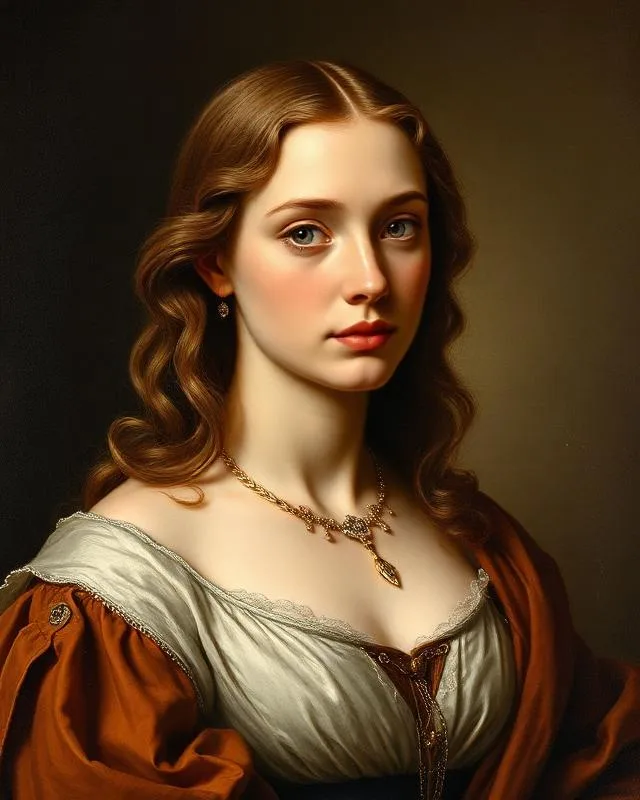
The third test separates a portrait from a poster. A photograph enlarged and framed is still a photograph, competing with the twelve already on the sideboard. A portrait in a painted style reads as art and gets hung where art goes, which is a different and better wall. The European rooms at the Metropolitan Museum of Art and the National Gallery of Art are five centuries of evidence for that.
The survival test is a materials question. Giclée printing, used properly, means pigment inks on heavy archival stock rather than dye inks on ordinary paper, and that decides whether the colour holds for decades or goes beige by the window. Conservation guidance from the Getty makes the point every museum makes about light: keep it off a wall in direct sun.
Can grandchildren in different cities appear in one portrait?
Yes, and this is the mechanic that makes the whole gift work. A group portrait is composed from separate photographs. Nobody has to be in the same room, the same city or the same year.
- Four grandchildren living in three different places, in one composition.
- A newborn the grandparents have not met in person yet.
- A teenager who refuses to be photographed, supplied from the one good picture you have.
- A grandparent who has died, from an old photograph, so the family is complete.
- The dog, who has never held a pose in his life.
The practical instruction is simple and people get it wrong constantly: send the clearest photo of each face, not one crowded group shot in which two children are squinting and a third is turned away. Sharp faces, even daylight, eye level. JPG or PNG up to 10MB each is plenty. Composition is the studio’s problem; likeness is yours. Our guide to the custom family portrait covers the process end to end, and the full range of portrait styles shows how groups are staged.

Should the family dog be in it?
Yes. One sincere reason and one strategic one.
The sincere one: for a great many grandparents the dog is a daily companion in a way the grandchildren, at three hundred miles, cannot be. Leaving him out is a decision they will notice. The strategic one: an animal in a formal portrait is what makes people laugh the first time they see it, and laughing beats polite gratitude. Dogs have been sitting in European portraits for centuries, in the collections at the Rijksmuseum as much as anywhere.
If the animal is the subject rather than a supporting character, start from pet portrait ideas or the Renaissance pet portrait page. If it is a cat, accept that the photography takes three sessions; the ASPCA’s cat care guidance explains the temperament you are negotiating with, and Humane World for Animals covers why the pet holds the position it does in most households.
How much should you spend on a gift for grandparents?
Market bands, not brand prices. A digital file typically runs about $30 to $60. A gallery-wrapped canvas lands roughly between $90 and $150. A framed piece starts around $150 and climbs past $250 with size, frame and the number of people in the composition. Additional subjects usually add cost, because each face is separate work.
One firm recommendation: buy it framed. A rolled canvas hands an eighty-year-old a project involving a frame shop, and a project is not a gift. Where several grandchildren are contributing, the framed tier is exactly where a three-way split lands comfortably. Before paying anyone unfamiliar, the FTC’s consumer advice is a two-minute check on sellers and refund terms.
What if a grandparent is no longer living?
Two decisions, and they should not be made together.
The first is whether to include them in a family portrait. Usually yes. A composition assembled from separate photographs can hold a grandfather who died in 2019 alongside a grandchild born in 2024, and for many families it is the only image containing both. The second is whether to give a surviving spouse a portrait of the person they lost, and that depends on the household. If the photographs are still out on the sideboard, it will be welcome. If they have been quietly put away, it will not. Ask a sibling rather than guessing. A plain account of how grief actually behaves is worth reading first. Where a tribute is right, the memorial portrait page shows how a single subject is handled.
Where should it hang, and will it last?
Above a sideboard, above a mantel, or up a stairwell. The stairwell is underrated: passed at close range several times a day rather than admired from a sofa twice a year. One sizing rule. Aim for roughly two-thirds the width of the furniture beneath it; smaller than half reads as an afterthought.
The frame decides the register. Ebony disappears and lets the faces work. A walnut floater reads gallery rather than gift shop. Gold or ornate brass pushes towards ceremony, which is either exactly right or slightly much. When in doubt, go quieter. For where these conventions come from, the National Portrait Gallery in London and the Smithsonian’s National Portrait Gallery are worth twenty minutes.
What should you check before you order?
- Decide who is in it first. Grandchildren only, the whole family, the dog, the ones no longer here.
- Collect the clearest photo of every face, checked at full zoom, in daylight, at eye level.
- Confirm you can see a preview before paying. That condition removes the risk from the purchase.
- Buy it framed. Do not outsource the framing to the recipient.
- Measure the wall, or ask a relative who lives closer to measure it.
- Ask what the print is made of: substrate, inks, frame material.
- Order early enough for the occasion. Made-to-order work carries production time before shipping.
Fur d’Amore builds the artwork with AI from photographs already sitting on your phone, then prints it on archival canvas and sets it in a heritage frame. Six styles: Royal, Aristocrat, Renaissance, Baroque, Military and Romantic. Group portraits are composed from separate photographs, so the cousins never have to be in the same postcode. Photos stay private, the preview is free, and a satisfaction guarantee sits behind it. Neighbouring guides: gifts for pet lovers, personalized gifts for him, personalized wedding gifts and engagement gift ideas.
Sources and further reading
Frequently asked questions
What is the best gift for grandparents who have everything?
A framed picture of the grandchildren. Grandparents who have furnished a house for fifty years do not need another object, and most are actively trying to own less. A portrait built from photographs claims wall space instead of drawer space, which means it is seen every day rather than stored. Anything that ends up in a cupboard has failed, however expensive it was.
What do grandparents want most from their grandchildren?
Contact and evidence. Grandparents who live far away experience the grandchildren mainly through a screen, and a phone album is something they have to remember to open. A printed picture removes that step. This is why photo gifts outperform every other category for this recipient, and why the same gift given to a thirty-year-old would land as clutter.
Can grandchildren in different cities appear in one portrait?
Yes. A group portrait can be composed from separate photographs, so four grandchildren in three cities, a newborn nobody has met yet and the family dog can all appear in one composition without ever being in the same room. Supply the clearest single photo of each face rather than one crowded group shot in which half the faces are compromised.
How much should you spend on a gift for grandparents?
Across the market a digital file runs roughly $30 to $60, a gallery-wrapped canvas about $90 to $150, and a framed piece from around $150 to $250 and up with size and frame. For grandparents, pay for the framed version. An unframed canvas becomes a task they have to solve, and tasks are not gifts.
What size portrait works best as a gift for grandparents?
Measure the wall before you order. Above a sideboard or mantel, a piece about two-thirds the width of the furniture beneath it looks deliberate. In a hallway, a stairwell or a smaller flat, a compact framed print hung at eye level does more work than an oversized canvas, because it is passed at close range several times a day.
Written by the Fur d’Amore studio — we reimagine the people and pets you love as Renaissance masterpieces on museum-grade canvas. See the portraits, or start with personalized pet gifts.