Custom Family Portrait: How to Turn Photos Into a Painting
A custom family portrait is a commissioned artwork of one specific family, built today from photographs rather than a live sitting. That single change — photos instead of a studio appointment — is what makes the form practical again. Nobody has to be in the same room, or the same country, or even still living nearby. You supply the clearest picture of each face, choose a style, and the composition is assembled around them. What follows is how to choose well: which photos actually work, which style suits which family, what the market charges, and the seven checks worth making before you hand over any money.
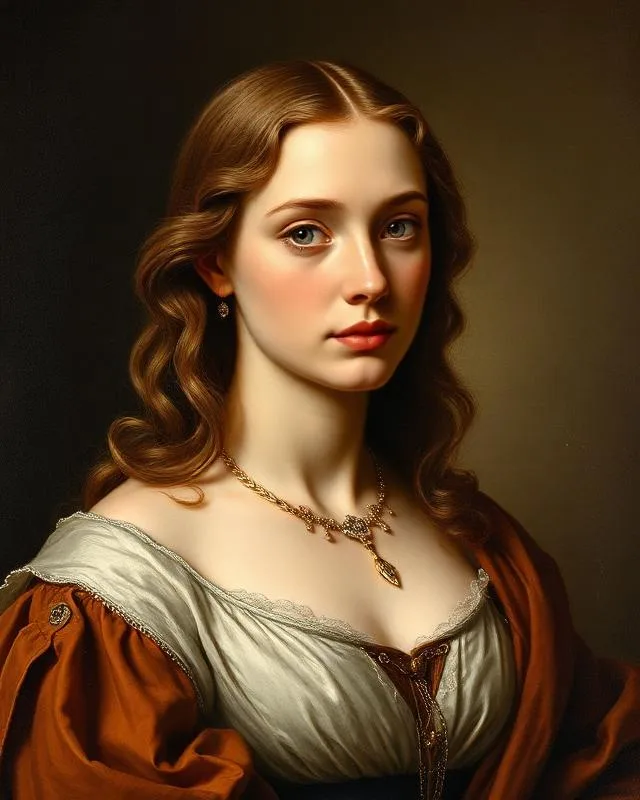
What is a custom family portrait?
Strip away the marketing and it is a very old product. For most of European history, a painted family portrait was the only way a household could be seen after the fact, which is why the genre carries so much weight: it was expensive, deliberate, and made to outlive the people in it. The National Portrait Gallery in London holds more than 11,000 painted portraits on exactly that premise, and the Smithsonian’s National Portrait Gallery was founded on the American version of it.
What changed is the production method, not the intent. A commissioned portrait no longer requires anyone to sit for hours; it requires a good photograph. The output is then printed — on canvas, on heavy fine art paper — and framed. The thing you hang on the wall is a physical object with a finish and a frame, which is why it behaves like an heirloom and a phone album does not.
Worth naming the distinction early, because it drives the price: a portrait executed by hand by a working painter is a different product from a portrait generated from your photo and then printed. Both end up framed on a wall. They do not cost the same, and they should not be described the same way. Ask which one you are buying.
What photo works best for a family portrait?
This is the part people underestimate, and it decides more than the style does. The rule is unglamorous: sharp faces, even light, eye level.
- Use daylight. A window on a bright but overcast day is the best free lighting there is. Direct midday sun carves hard shadows across faces; a flash flattens them.
- Shoot at eye level. Photos taken from above shorten the face and tilt the head down. Get level with the shortest person in the group.
- Faces must be in focus. Resolution matters less than clarity. A crisp phone photo beats a blurry photo from an expensive camera every time.
- Remove the obstacles. Sunglasses, low hat brims, hair across the eyes and heavy filters all delete the information that makes a person recognisable.
- Expressions should be natural. The half-smile someone actually wears beats the grin they perform for a camera. You will be looking at this for years.
If your best group photo has one person squinting and another turned away, do not settle for it. Send separate photos instead — see below.
| Style | Reads as | Best for |
|---|---|---|
| Renaissance | Warm, composed, timeless | Multi-generation groups; a first family portrait |
| Royal | Ceremonial, slightly theatrical | Families with a sense of humour about themselves |
| Aristocrat | Understated finery, no crown | Couples and small families; quieter rooms |
| Baroque | Deep shadow, rich drapery, drama | A single striking subject; dark-walled rooms |
| Romantic | Soft, painterly, tender | Anniversaries, weddings, new babies |
| Military | Formal, decorated, upright | Service families; a tribute to a specific person |
Which style suits your family?
Two questions settle it. First: what room is it going in? A dark, dramatic Baroque piece fights a bright modern kitchen and wins in a panelled study. Second: how seriously does this family take itself? The comedy of a costume portrait comes from the contrast between a solemn Old Master frame and faces you know from Sunday lunch. Some families want that contrast turned up; others want the tribute played straight.
If you are unsure, look at how the tradition actually handled groups. Rembrandt’s large group portraits at the Rijksmuseum are the reference point for arranging many faces without the composition collapsing into a row of heads, and the European rooms at the Metropolitan Museum of Art and the National Gallery of Art show the same problem solved a dozen ways. Fifteen minutes browsing either collection will tell you more about what you like than any style menu.
For the mechanics of how a photograph becomes a painted-style portrait, our guide to custom portraits from photos covers the process end to end, and Renaissance portraits explains where the costume conventions come from.
Can a family portrait be made from separate photos?
Yes — and it is the single most useful thing about the format. A composed portrait does not require everyone to have been in the same place at the same time. Each person can come from a different photograph, which quietly solves problems that a photo shoot cannot:
- A sibling who lives abroad and has not been home in three years.
- A grandparent who is no longer living, but whose photograph you still have.
- A newborn and a teenager who will never again be photographed at these ages together.
- A dog or cat who will not hold a pose for a photographer under any circumstances.
The practical instruction is simple: supply the clearest available photo of each face rather than one crowded group shot where three of the five are compromised. Composition is the studio’s job. Likeness is yours.
Including the animals is standard, not an add-on: a family portrait with the dog in it is often the version people actually want. If the pet is the main subject rather than a supporting one, start from pet portrait ideas instead, and if it is a couple rather than a household, the couple portrait page shows how two subjects are usually staged.
How much does a custom family portrait cost?
Prices across the market cluster into three honest bands. A digital file — the artwork, delivered as an image you print yourself — typically runs about $30 to $60. A gallery-wrapped canvas lands roughly between $90 and $150. A framed piece starts around $150 and rises past $250 with size, frame choice and the number of people in the composition. Extra subjects almost always cost extra, because each face is separate work.
Above those bands sits an entirely different product: a commission painted by hand by a portrait artist, priced per sitting or per square inch, generally in the low thousands. If that is what you want, you should buy exactly that and expect to wait months for it. What you should not do is pay commissioned-painting prices for a printed reproduction, or accept vague language about how a piece was made. If a seller will not say plainly how the artwork is produced, that is your answer. The FTC’s consumer advice is a reasonable sanity check on unfamiliar sellers, delivery promises and refund terms before you hand over a card number.
How should a family portrait be printed and framed?
The physical specification is where a portrait either becomes an heirloom or fades to beige in four years by a sunny window. Two terms are worth knowing.
Giclée describes fine art inkjet printing, and in professional use it means pigment inks on heavy archival stock rather than dye inks on ordinary paper — the distinction that determines whether colour holds for decades. The background on the term is worth two minutes, mostly so you can tell when it is being used loosely. Archival canvas means a substrate and coating chosen for longevity rather than cost.
Then the frame. A heavy ornate frame pushes a portrait towards the ceremonial; a floater frame on canvas reads contemporary and gallery-like; a plain dark moulding gets out of the way entirely. Conservation-minded guidance from institutions like the Getty makes the same point about light that applies in any living room: keep it off a wall in direct sun, and it will look the same in twenty years as it does the week it arrives.
What should you check before you commission one?
Seven checks, in the order they matter:
- Confirm you can see the finished look before you pay. A preview removes the entire risk of the purchase.
- Check every face is sharp in the source photos, at full zoom, before sending them.
- Decide who is in the portrait — including pets, including people no longer with you.
- Pick the style before the size. Style determines mood; size only determines presence.
- Measure the wall. Aim for roughly two-thirds the width of the furniture beneath it.
- Ask what the print is made of, not just what it looks like: substrate, inks, frame material.
- Order early enough for the occasion. Made-to-order work carries production time before shipping even starts.
Where does a family portrait actually belong?
Above the fireplace is the cliché and it works: a portrait needs a focal wall and enough distance to stand back. Stairwells are the underrated option, because you pass them several times a day at close range. Hallways suit a smaller framed piece at eye level far better than an oversized canvas.
What a family portrait should not be is filed. That is the argument for the physical object over the digital file — an image in a folder gets scrolled past, while a framed painting demands a decision about which wall and then becomes part of the room. Fur d’Amore builds the artwork with AI from photographs already on a phone, then prints it on archival canvas and sets it in a heritage frame. You see a free preview before you pay, so whether it works on your particular faces is settled before any money changes hands. Rated 4.9/5 by 10,000+ customers.
Sources and further reading
Frequently asked questions
What is a custom family portrait?
A custom family portrait is a commissioned artwork of a specific family, made to order rather than bought off a shelf. Today most are built from photographs instead of live sittings, which is why a family of five spread across three states can still end up in one painting. The finished piece is usually printed on canvas or fine art paper and framed for a wall.
What photo works best for a family portrait?
A sharp, well-lit photo taken at eye level, with every face clearly visible and nobody in deep shadow. Daylight near a window beats a flash. Avoid heavy filters, motion blur, sunglasses and hats that hide the eyes. The resolution matters less than the clarity of the faces, because faces carry the likeness and everything else is costume and background.
Can a family portrait be made from separate photos?
Yes, and this is one of the strongest arguments for a painted portrait over a photo shoot. Each person can be supplied from a different image, which means absent relatives, grown children living abroad and pets who refuse to sit still can all appear in the same composition. Supply the clearest photo of each face rather than one crowded group shot.
How much does a custom family portrait cost?
Across the market, a digital file typically runs about $30 to $60, a gallery-wrapped canvas roughly $90 to $150, and a framed piece from about $150 to $250 and up depending on size, frame and the number of subjects. Oil commissions executed by hand by a working painter sit far above that range and are priced per sitting or per square inch.
What size should a family portrait be?
Match the wall, not the ambition. Above a sofa or mantel, a piece roughly two-thirds the width of the furniture below it looks deliberate; smaller than half and it reads as an afterthought. For a hallway or desk, a compact framed print at eye level does more work than an oversized canvas in a room nobody sits in.
Written by the Fur d’Amore studio — we reimagine the people and pets you love as Renaissance masterpieces on museum-grade canvas. See the portraits, browse all six portrait styles, or start with personalized gift ideas.