Cat Portraits: Why a Canadian Winter Is the Right Time
A Canadian winter keeps a cat indoors for months at a stretch, and that turns out to be the best possible circumstance for a cat portrait rather than an obstacle to one. Long indoor months mean the cat is nearby, unbothered, and repeatedly lit by low, soft window light — the single most flattering light a camera can ask for. This guide is about using that light: the windowsill and the radiator as a natural studio, how a heavy northern coat renders in it, the specific problem of a black cat, and which of Fur d'Amore's six styles suits a cat's dignity once a usable photo exists.
Why Winter Is the Best Time to Photograph a Cat in Canada
Most of the year, a Canadian cat is somewhere else — under a bed, on a balcony, out of sight for hours. Winter changes that. From roughly November through March, an indoor cat's whole world narrows to a handful of favourite spots, and it spends far more of each day in view than in July. That's not a compromise; it's an advantage a summer photo session simply doesn't have. A cat curled on a windowsill for an entire winter afternoon has already done the hard part — staying still, staying lit, staying put — days before anyone picks up a camera.
None of this requires arranging anything. The point isn't to pose a cat in winter light; it's to notice where the cat has already organized its own day around it, and be ready with a phone when the moment recurs, as it reliably does.
Why Winter Window Light Flatters a Cat
The sun sits low in the sky through a Canadian winter, and low sun through glass produces exactly the kind of light portrait photographers spend real money trying to recreate indoors: soft, diffused, and coming from the side rather than straight overhead. Summer's midday sun is nearly the opposite — high, harsh, and prone to flattening a cat's face into shadow under its own brow. A winter window does the opposite of that automatically. The glass itself softens the light further, scattering it enough to fill in shadow without washing out the finer detail in a cat's fur, and the low angle means the light rakes gently across a face instead of falling flat onto the top of a head.
The result, most winter afternoons, is a cat already sitting in what a photographer would call good directional light: bright enough to bring out detail, soft enough not to blow out the pale patches, and angled enough to give whiskers and fur texture actual shape rather than flattening them.
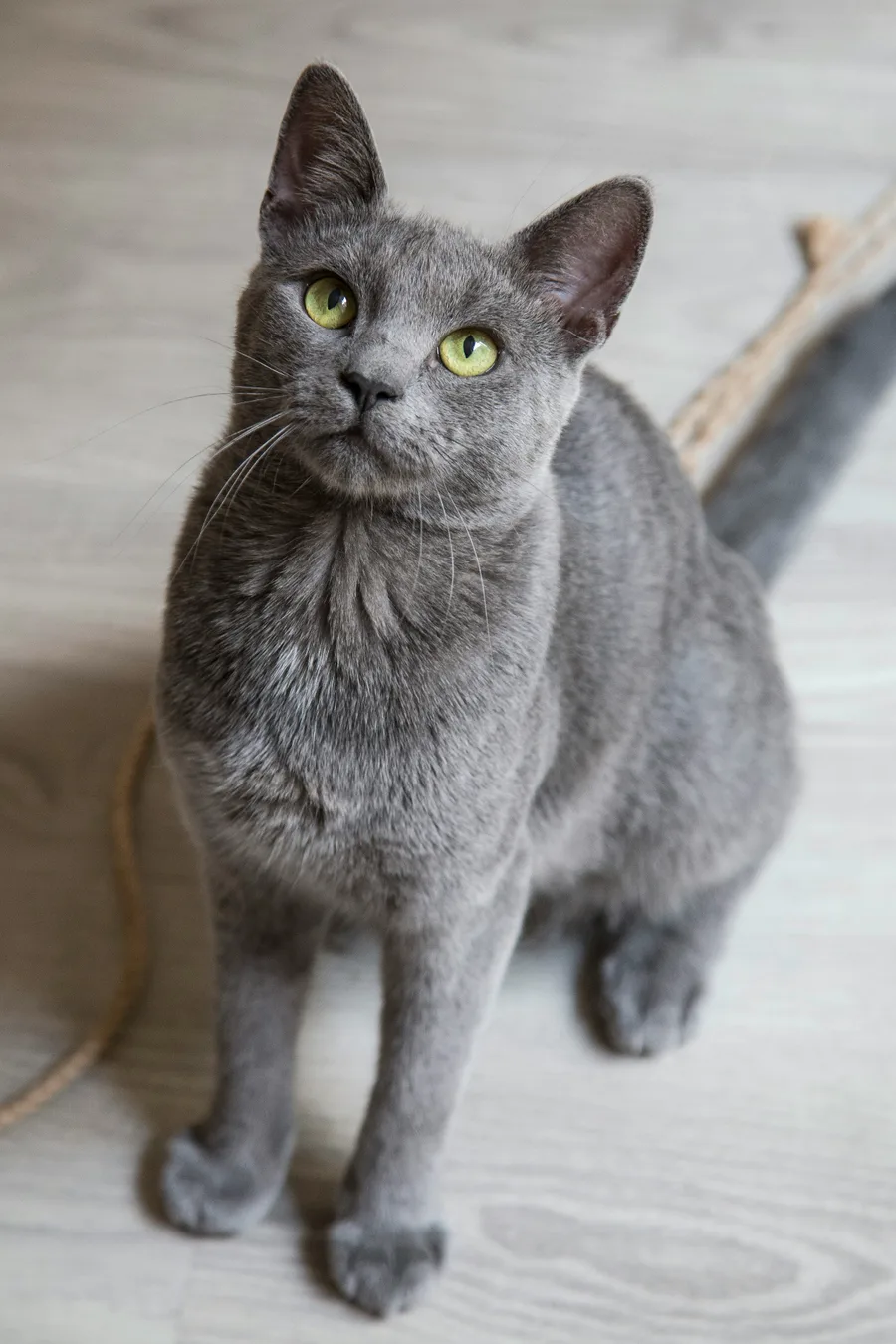
The Radiator and the Windowsill: A Natural Studio
Every Canadian home already has one or two spots a cat claims through the cold months, and each one doubles as a ready-made studio. A windowsill that catches the low afternoon sun for exactly forty minutes each day is the obvious one. A heating vent or an old-fashioned radiator, claimed with the seriousness of a border dispute, is the other — cats gravitate to warmth as reliably as they gravitate to light, and the two often coincide near a window anyway. In a Toronto condo, that's frequently the ledge beside the balcony door; in a Montreal walk-up, it's often the radiator under the front window, the warmest corner of the whole apartment by January.
The practical approach is to work with whichever spot the cat has already chosen rather than trying to relocate the whole project to somewhere more convenient. Note the time of day the light is best, keep a phone within reach, and take more photos than seems reasonable when the moment arrives — the useful frame is rarely the first one, and a cat's attention rarely lasts long enough for a second attempt on the same afternoon.
Heavy Northern Coats: Maine Coons in Winter Light
A Maine Coon grows a genuinely heavy winter coat — a thick ruff, tufted ears, a tail like a duster — and that density is exactly the kind of detail flat overhead light tends to flatten into a single mass of colour. Soft, angled winter window light does the opposite: it catches the individual layers of a heavy coat, throwing enough gentle shadow between them that the portrait can render actual texture rather than a uniform silhouette. The same is true of any long- or double-coated breed built for a Canadian winter, not just the Maine Coon specifically.
This is where style choice starts to matter. Baroque, with its deep shadow and gilt, rewards exactly this kind of textured, high-contrast coat — a heavy ruff photographed in raking light gives the style real material to work with, the kind of layered detail worth a second look, not unlike the fur and fabric texture prized in the paintings held at the Vancouver Art Gallery or the Montreal Museum of Fine Arts. A lighter-coated cat in the same light suits Renaissance's warmer, more even glow just as well, simply with less dramatic contrast to render.
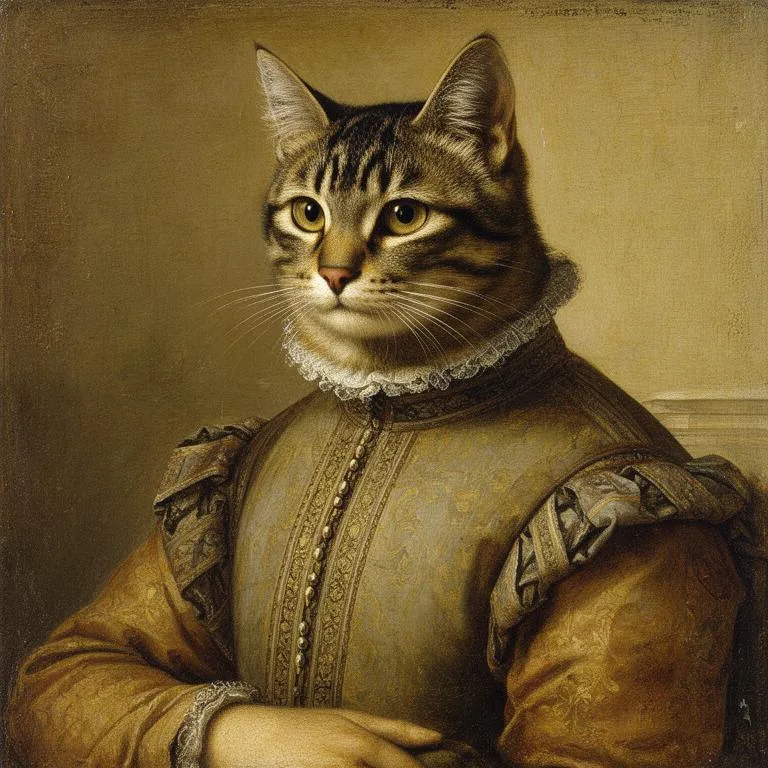
The Black Cat Problem, and Winter's Fix
A black cat is the genuinely hard case, in any season. Cameras — and eyes — struggle to find detail in dark fur against a dark background, and a black cat photographed under flat, even light or against a dim interior wall often reads as little more than a silhouette with two eyes in it, all the individual fur detail lost to shadow. This isn't a flaw in the cat; it's a straightforward optical problem, one portrait painters faced for centuries before cameras existed. Museum collections are full of dark-coated subjects rendered successfully against equally dark backgrounds, and the fix painters and photographers arrived at independently is the same one: separate the subject from the background with directional light, rather than trying to fix it afterward.
Winter window light happens to be exactly that fix, already available for free. Position a black cat so the low winter sun comes from the side or slightly behind, rim-lighting the edge of its fur against the window's brightness, rather than photographing it face-on against a dim wall. That rim of light is often enough to separate the cat's outline from the background and pick out enough surface detail — the individual hairs along an ear, a whisker catching the light — for a portrait to have something real to work from. A pale windowsill or a light-coloured blanket underneath helps further, giving the eye and the camera a bright reference point next to all that black.
Which Style Suits a Cat's Dignity?
Cats carry most of the six styles well, since an existing air of superiority does a lot of the work before a single brushstroke of digital paint is applied. The choice usually comes down to coat and colouring more than temperament, once a genuinely usable winter photo exists.
| Coat in winter light | Suggested style | Why it works |
|---|---|---|
| Heavy, long, tufted (Maine Coon and similar) | Baroque | Deep shadow and gilt reward the layered texture a thick winter coat provides. |
| Black or very dark | Royal or Baroque | Rim-lit against a window, dark fur holds strong contrast and reads as gravity, not gloom. |
| Pale, cream or ginger | Renaissance | Warm, even light suits lighter fur without needing heavy shadow to add drama. |
| Soft, fluffy, rounder-faced (Ragdoll and similar) | Romantic | A famously docile look suits the gentlest of the six styles. |
None of this is binding, and the free preview is the only opinion that actually counts — a plain tabby carries Royal as convincingly as a purebred does, and coat colour is a better guide than pedigree either way. Whatever the coat, the animal behind it deserves the same care as the portrait: the Ontario SPCA and the BC SPCA both publish sound seasonal advice for keeping an indoor cat content through a long winter, portrait or no portrait.
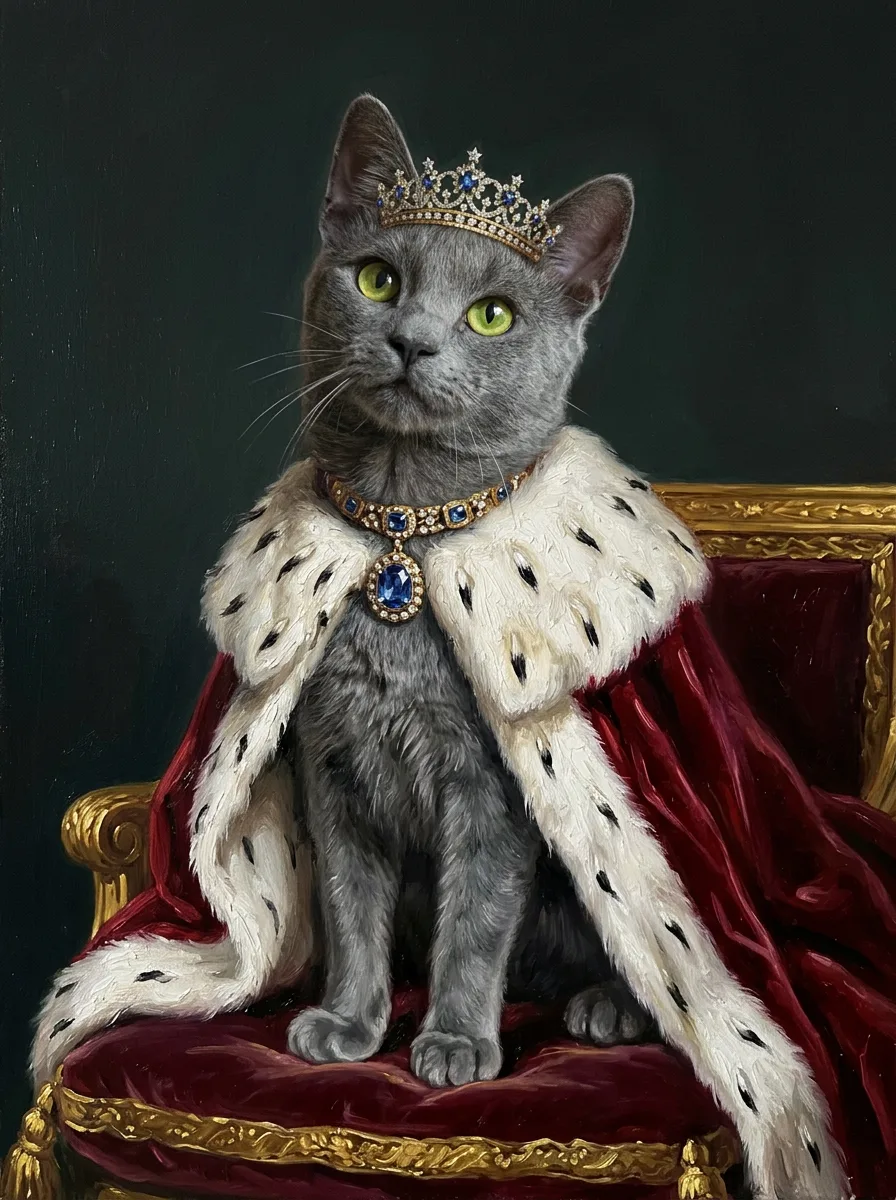
Pricing and Delivery to Canada
A cat portrait sits on the same Canadian price ladder as any other Fur d'Amore piece: roughly $27 CAD for a digital download, climbing through desk portraits and plain canvas toward about $425 CAD for the largest heirloom-framed canvas. Every figure displays in Canadian dollars and moves with exchange rates, confirmed at checkout. The image itself is AI-generated from your uploaded photo, in a giclée-grade archival print once approved — which is exactly what makes a free preview possible before paying anything. Fur d'Amore ships to Canada. Digital downloads are available instantly; printed and framed portraits take 5–7 business days for production, and international delivery typically takes 7–14 business days, as stated in the questions section of the Fur d'Amore homepage.
As with any parcel arriving from outside the country, general Canadian rules on GST/HST and duty can apply above certain values, typically collected by the courier or Canada Post on delivery. Worth a look before ordering from any overseas retailer, and the Canadian Veterinary Medical Association is a sound source for anything health-related a winter photo session happens to turn up along the way.
A cat portrait suits the same Canadian calendar as any other — Thanksgiving in October, Christmas, or no occasion beyond the cat deserving it. The category guide lives at pet portraits, and all six styles are laid out at the portraits collection. A dog in the same household has its own guide at dog portraits, a personalized gift idea for a cat-owning household lives at gifts for cat lovers, and the full Canadian range is gathered at the Fur d'Amore Canada hub.
Sources and further reading
Frequently asked questions
Why is winter actually a good time to photograph a cat in Canada?
Long indoor months mean a cat spends far more of each day in view, usually in a favourite sunlit spot, than it would in summer. That spot is also lit by low winter sun through glass, which is naturally soft and directional — the kind of light photographers otherwise work hard to create indoors.
How does winter window light actually help a cat portrait?
The sun sits low through a Canadian winter, and low light through glass is soft, diffused, and angled rather than harsh and overhead like midday summer sun. That combination brings out fur texture and whisker detail without washing out pale patches or flattening the face into shadow.
How do I photograph a black cat well in winter?
Position the cat so low winter light comes from the side or behind, rim-lighting the fur's edge against the window's brightness, rather than shooting face-on against a dim wall. A pale surface underneath the cat helps too, giving the camera a bright reference point next to the dark fur.
Which Fur d'Amore style suits a heavy-coated cat like a Maine Coon?
Baroque generally suits it best. Its deep shadow and gilt reward the layered texture a thick winter coat provides, especially when photographed in raking, low-angle window light. A lighter or pale-coated cat often suits Renaissance's warmer, more even glow instead.
Does Fur d'Amore ship cat portraits to Canada, and what will it cost?
Yes, Fur d'Amore ships to Canada with every price shown in Canadian dollars, from about $27 for a digital download to roughly $425 for the largest heirloom-framed canvas. For parcels arriving from outside Canada, general Canadian rules on GST/HST and duty can apply above certain values.