Personalized Dog Gifts: 23 Custom Ideas (2026)
A personalized dog gift only works if it features their dog. A mug that says "Dog Mom" is merchandise; a mug with their beagle's face on it is a keepsake. The distinction sounds small and decides everything — generic pet goods get replaced within a year, while anything carrying the animal's actual likeness gets kept, displayed and photographed. Below are 23 custom ideas ranked from everyday to heirloom, plus the quality checks that separate a gift worth giving from a printed disappointment.
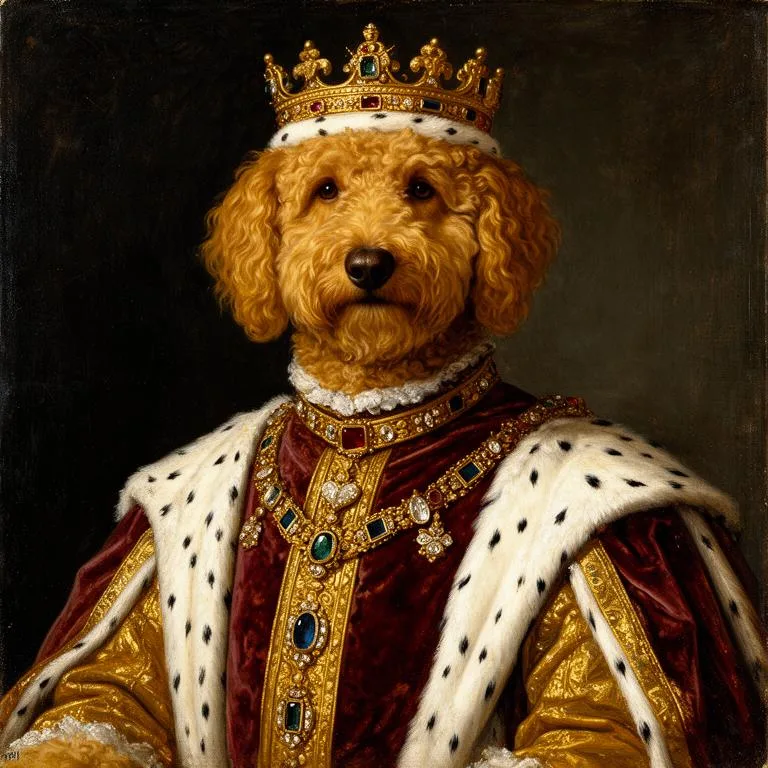
The 23 best personalized dog gifts, at a glance
- A Renaissance portrait of their dog — the heirloom
- A framed desk print made from one photo
- An engraved stainless or brass ID tag
- A leather collar embossed with the dog's name
- An embroidered sweatshirt with the dog's likeness
- Custom socks printed with the dog's face
- A monogrammed travel bowl and mat set
- A hardback photo book of their years together
- An etched glass or decanter with the dog's silhouette
- A personalised doormat with the dog's name
- A paw-print keepsake kit
- A "gotcha day" or adoption-date print
- An engraved keyring cut to the dog's silhouette
- A custom pet-portrait tote or weekend bag
- A named feeding station or raised bowl stand
- A custom line-art print for a minimalist home
- A keepsake ornament with the dog's face
- A personalised blanket for the sofa they have annexed
- An engraved plaque for a memorial garden
- A custom phone case with the dog's portrait
- A named training-treat pouch
- A shelter donation made in the dog's name
- A group portrait combining every pet in the household
What makes a personalized dog gift actually good?
Three things, in order of importance.
Likeness. The gift has to be recognisably that dog. A silhouette of a generic labrador is decoration; a portrait where the owner can see the exact patch of white on the chest is a keepsake. This is why photo-based gifts outperform breed-based gifts by a wide margin.
Display value. Ask where the gift will physically live. Wall, desk, wrist, keyring — good. Bottom of a drawer — bad. Apparel sits awkwardly in between, because it is only seen when worn and only worn if it fits the recipient's actual style.
Object quality. Personalization does not rescue a cheap product. A blurry image printed on a thin canvas is worse than no gift at all, because it makes the dog look bad. The material and the printing method matter more than the customisation gimmick.
| Budget | Best picks | Lifespan | Risk |
|---|---|---|---|
| Under $25 | Engraved ID tag, keyring, custom socks, doormat | Tag and keyring: years. Fabric: a season or two. | Low — hard to get badly wrong |
| $25–$75 | Embroidered sweatshirt, embossed collar, tote, ornament | Two to five years with normal use | Sizing and style mismatch |
| $75–$150 | Photo book, paw-print kit, feeding station, line-art print | Indefinite if stored well | Print and binding quality |
| $150+ | Renaissance portrait on archival canvas, framed group portrait | Decades, if printed and framed properly | Getting the photo and the frame right |
Why does a portrait outperform everything else on the list?
Because it is the only item most people will hang. Everything else competes for drawer space; a portrait competes for wall space, and wall space is where meaning gets stored in a home.
There is also a long precedent behind the format. Portraiture became an independent genre during the Renaissance precisely because people wanted their status, character and affections recorded in a durable object — and animals had already been carrying symbolic weight in Western art for centuries, as the Met's essay on animals in medieval art documents at length. Standing a golden retriever in the compositional language of the National Gallery's Renaissance masterpieces is a joke that works because the form is serious. Play it straight and the contrast does the work.
If you want to see how a photo becomes one, our guide to Renaissance pet portraits walks through the process, and the dog portrait from a photo page covers what happens after you upload.
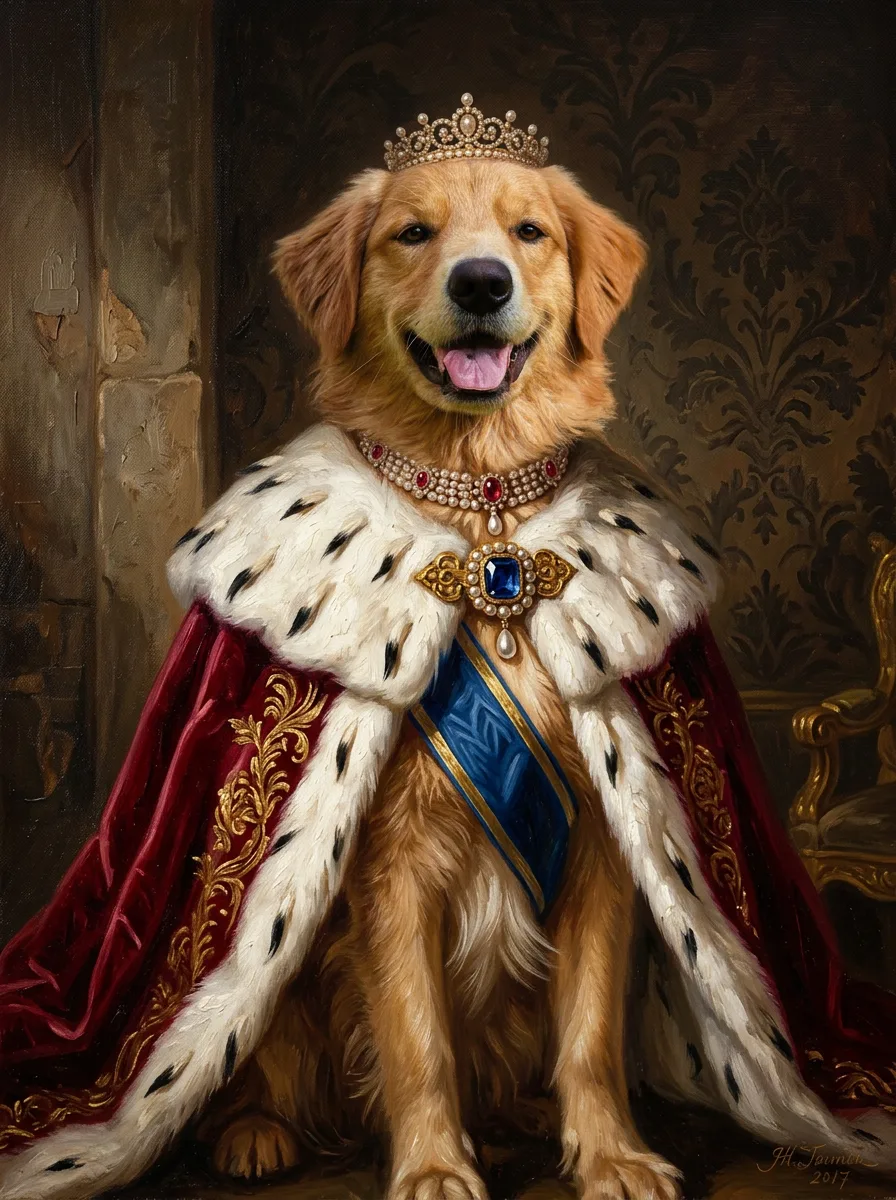
Which photo should you use?
This is the single biggest lever on the result, and most people get it wrong by choosing the photo they find emotionally significant rather than the photo that is technically usable. Use both if you can — but lead with the clear one.
- Light: daylight, ideally near a window or outdoors on an overcast day. Direct flash flattens the face and blows out light-coloured fur.
- Angle: front-facing or a slight three-quarter turn. A dog photographed from directly above loses the muzzle entirely.
- Focus: the eyes must be sharp. Everything else can be forgiven; blurred eyes cannot.
- Distance: close enough that the head fills a decent share of the frame, but not so close that a wide-angle phone lens distorts the snout.
- Resolution: a recent phone photo is plenty. A screenshot of a photo, or a photo of a printed photo, is not.
If the only good picture you have is an old print rather than a file, photograph or scan it in even, indirect light and handle it by the edges — the Library of Congress guidance on the care, handling and storage of photographs is the reference standard for anything irreplaceable.
How do you judge the physical quality?
Custom sellers rarely lie outright; they just describe the printing vaguely. Three questions cut through it.
What is the print process? Giclée is the term for fine-art inkjet printing on archival substrates, typically with pigment-based inks that resist fading far better than dye-based ones. If a seller cannot tell you the ink type or the substrate, assume the cheaper answer.
What is the frame doing? A frame is not decoration; it is a preservation system. UV-opaque glazing, acid-free board and a backing that keeps the artwork off the glass are what stop a print yellowing on a sunny wall — the Library of Congress preservation guidelines for matting and framing spell out exactly what to ask a framer for.
Do you see it before you pay? The best protection against a bad custom gift is a preview. The FTC's online shopping guidance is blunt about the rest: check the return policy before ordering, keep records, pay by credit card, and walk away from sellers who insist on gift cards or transfers.
Personalized gifts for the dog, not just the owner
Half of this list is for the human. It is worth spending part of the budget on the animal, and personalisation genuinely helps here: an engraved ID tag with a current phone number is the cheapest insurance in dog ownership, and an embossed leather collar outlasts three nylon ones.
Beyond identification, match the gift to the dog's actual life stage. A young dog benefits from a named training-treat pouch and enrichment; an older dog benefits from a raised feeding station that reduces the stoop. The Cornell Riney Canine Health Center's health topics library covers joint and mobility issues in plain language, and the American Kennel Club's expert advice section is a reasonable first stop for training and grooming questions. For rehoming, adoption and general welfare questions, Humane World for Animals maintains a good pet-owner resource library.
One caution on gift baskets: if you are adding treats, plants or flowers, check them first. Several common houseplants and cut flowers are toxic to dogs, and the ASPCA's toxic and non-toxic plant list is the fastest way to confirm before you buy.
Matching the gift to the occasion
Occasion changes the right answer more than budget does. A birthday or a "just because" rewards something playful — socks, a mug, an ornament. A housewarming or an anniversary rewards something for the wall. A new puppy calls for a tag and a collar now, and a portrait a few months later once the face has settled into itself. A memorial calls for restraint: no costumes, no urgency, and no discount language. Our guides to dog memorial gifts and pet memorial gifts cover that register properly.
For more options by recipient rather than by object, see dog dad gifts, dog mom gifts, and the broader list of personalized pet gifts covering cats and multi-pet households.
Sources and further reading
Frequently asked questions
What is the best personalized dog gift?
A custom portrait of the dog is the highest-impact option, because it is the only gift on most lists that gets hung on a wall and looked at every day for years. Below that tier, engraved metal — a collar tag, a keyring, a small plaque — lasts longest per dollar spent.
What photo works best for a personalized dog gift?
Use a well-lit, front-facing photo where the dog's whole face is visible and in focus. Daylight near a window beats flash. Avoid heavy shadows across the muzzle, motion blur, extreme wide-angle phone selfies, and photos where the dog is looking away or partly hidden behind furniture.
Are personalized dog gifts worth the money?
They hold value better than generic pet merchandise because they cannot be replaced by a cheaper equivalent. The failure mode is quality, not concept: a badly printed custom mug is still junk. Judge the physical object — the print method, the material, the frame — not just the personalization.
What is a good personalized gift for someone who just got a puppy?
Pair something practical with something that marks the date. An engraved ID tag and an adjustable collar cover the practical side; a framed print of the first photo, or a portrait commissioned a few months in once the puppy's face has settled, marks the beginning of the friendship.
Can you personalize a gift for more than one dog?
Yes, and group pieces are often the better buy. Multiple pets can be combined into a single portrait from separate photos, which is usually more striking than several small individual items and reads as one deliberate piece rather than a collection of matching merchandise.
Written by the Fur d’Amore studio — we reimagine beloved pets as Renaissance masterpieces on museum-grade canvas. See the portraits, or browse the full range of gifts for dog lovers.